BMW 8 Series Vinyl Wrap Review: Gloss Black Wheel Transformation
Service Price
$approx. $1,500+
Estimated price · Actual price may vary by shop
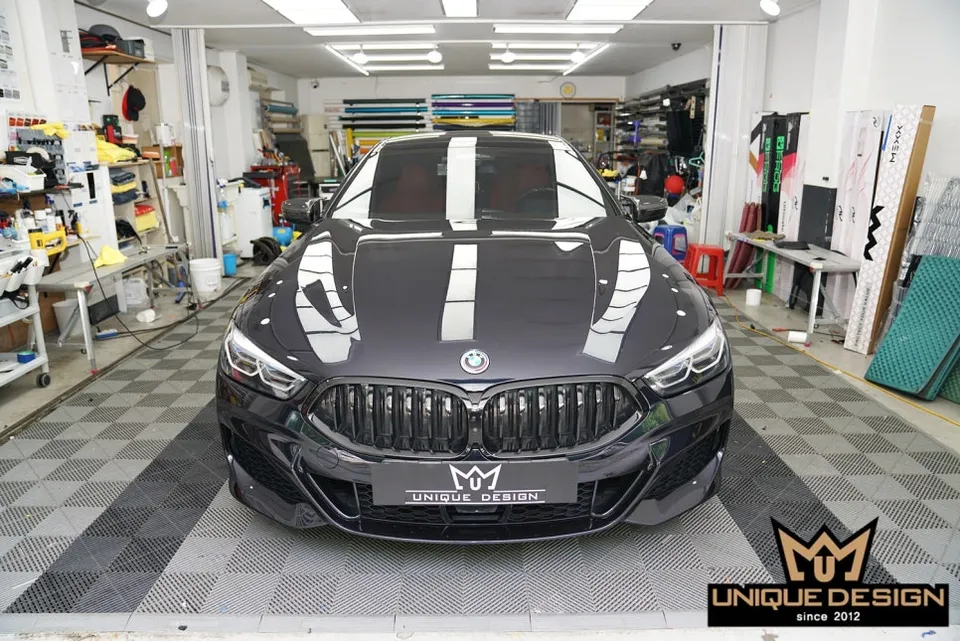
Gloss black vinyl wrap on BMW 8 Series wheels: Transforms appearance, hides imperfections. Cost varies.
Transforming BMW 8 Series Wheels with a Gloss Black Vinyl Wrap
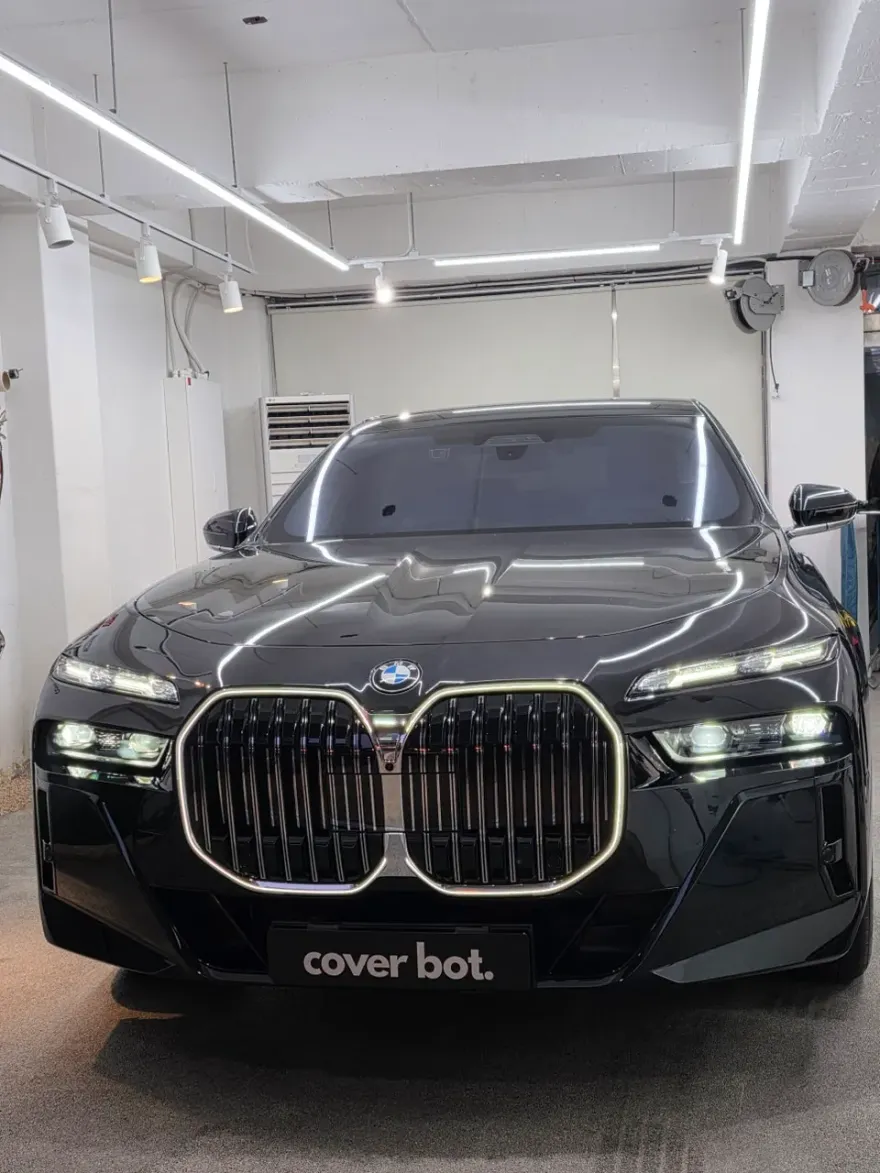
Choosing the right wheels to complement your car's finish is crucial. This BMW 8 Series, having previously undergone a chrome delete, returned for a complete transformation of its stock wheels into a sleek gloss black finish. Wheel wrapping, unlike painting or powder coating, utilizes specialized films offering excellent restorative properties. While feasibility depends on the vehicle and wheel design, BMW wheels, with their typically black inner structures, are ideal candidates for achieving a visually seamless and sophisticated look.
This article will cover:
- Wheel requirements for successful wrapping
- Preparation steps for BMW wheel wrapping
- Hand-cutting vs. data-cutting methods
- The application process and quality check
- Cost, time, and durability information
- Frequently Asked Questions (FAQ)
Can Any Wheel Be Wrapped?
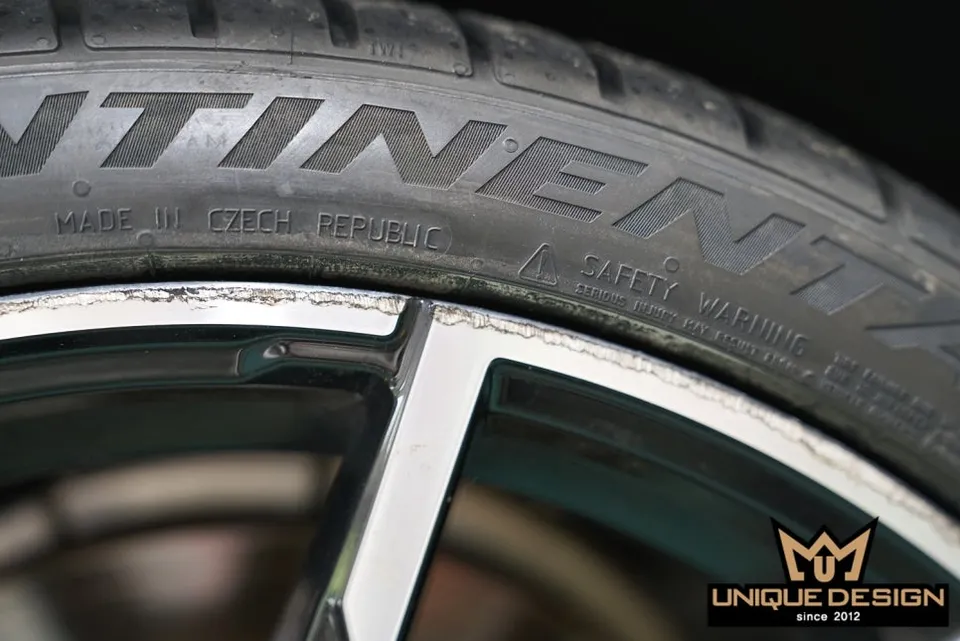
Many car owners inquire about the possibility of wrapping their wheels. The answer is often no. The suitability of a wheel for wrapping hinges on its surface structure. Specifically, wheels with a black interior finish yield the most aesthetically pleasing results. If the wheel's inner sections are silver or have a high-gloss finish, the wrap may not adhere properly or the color may not appear as intended. The stock wheels on this BMW 8 Series featured the ideal black interior, making them perfect for this upgrade. Even with minor scratches and curb rash, a wheel wrap can effectively conceal these imperfections, though significant damage would require a different solution.
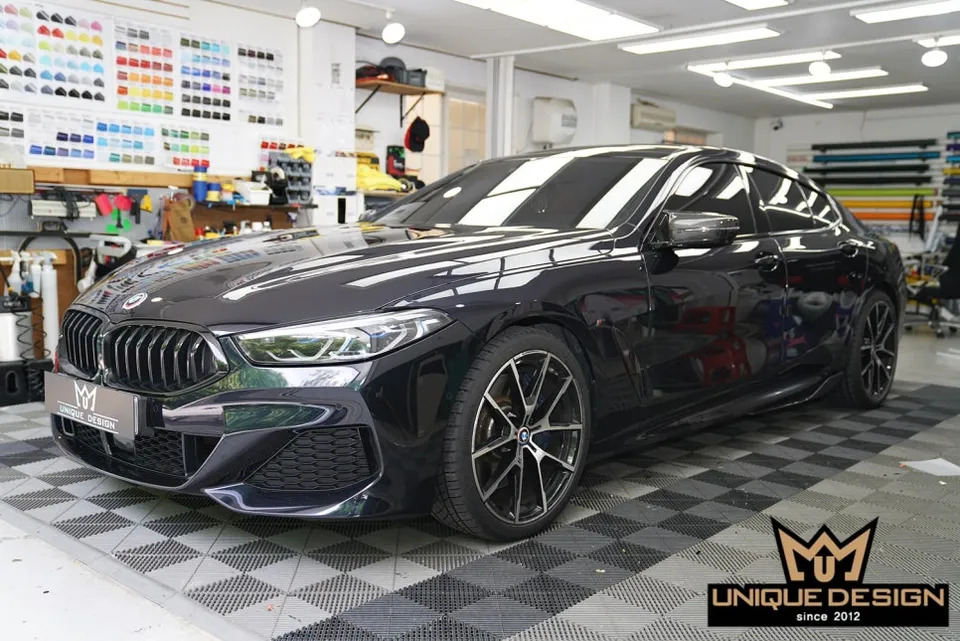
Detailed Inspection Before Wrapping
Before commencing the vinyl wrap installation, the detailing team conducted a thorough inspection of the wheels. Every area, from the outer rim and deep inner sections to the bead where the tire meets the wheel, was examined. Understanding the extent of existing damage is key to predicting the final outcome of the wrap. Following the inspection, the wheels were removed from the vehicle and meticulously cleaned. Removing all dirt, dust, and tire residue is essential for ensuring the vinyl film adheres without any air bubbles. Only after a perfect clean and dry can the wrapping process begin.
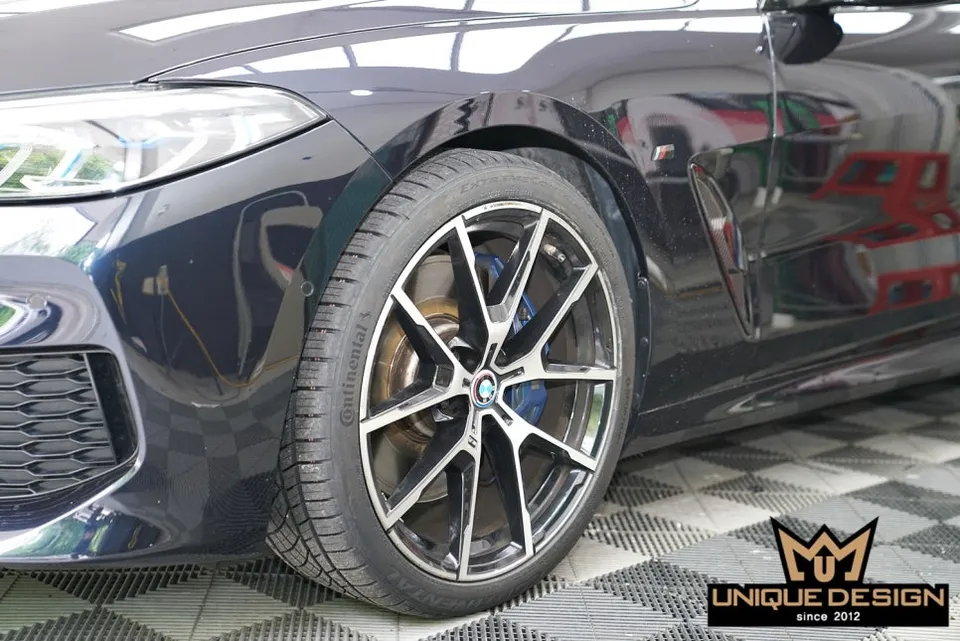
Understanding Wheel Wrapping Techniques
There are two primary methods for wheel wrapping. The first is 'hand-cutting,' where a single sheet of vinyl film covers the entire wheel, and excess material is precisely trimmed by hand with a blade after application. The second is 'data-cutting,' which involves digitizing the wheel's dimensions to pre-cut the vinyl film using a precision machine before applying the pieces to their exact locations. Data-cutting offers high accuracy but requires custom data for each wheel model, increasing time and cost. For this BMW 8 Series, the team opted for the hand-cutting method after the film was fully applied, finding it to be a faster and more efficient approach for these specific wheels.
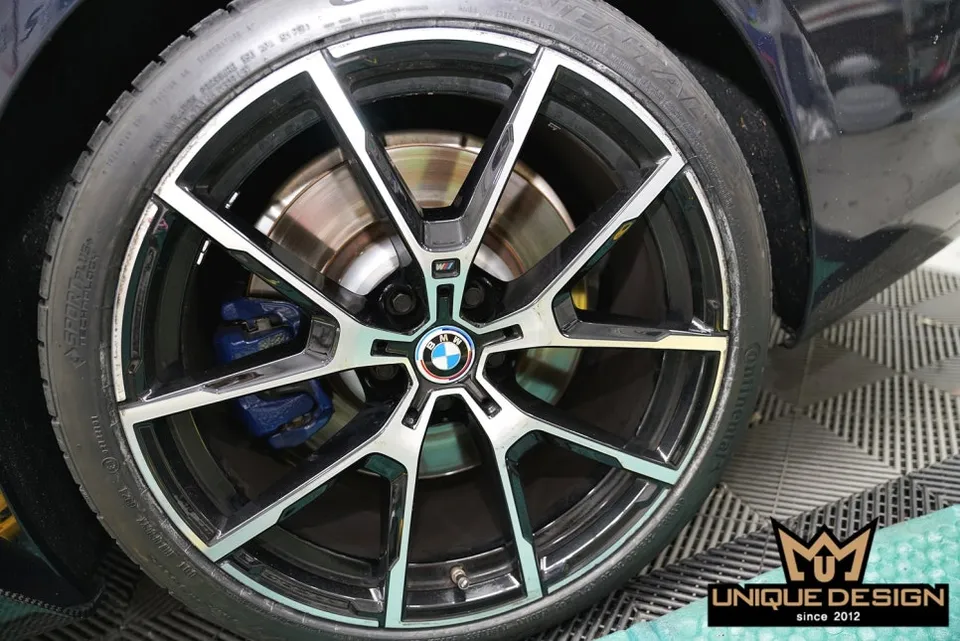
The Crucial Application Process
After cleaning and drying, a specialized solvent is sprayed onto the wheel surface. This solvent ensures the vinyl film adheres perfectly, preventing the formation of air pockets that can cause lifting. Once sprayed, the vinyl film is laid over the wheel. Using a heat gun, the film is gently heated and gradually pressed onto the wheel's contours. The heat gun temperature is typically maintained between 60-80 degrees Celsius; too low and the adhesive bond weakens, too high and the film can be damaged. Experienced installers often gauge the correct temperature by touch. The core of the process lies in achieving a bubble-free, flawless adhesion across all curves, crevices, and inner sections of the wheel.
Installation process:
- Thoroughly clean and dry the wheel surface to ensure optimal adhesion.
- Apply a specialized solvent to the wheel and carefully position the vinyl film.
- Use a heat gun to gently warm and stretch the vinyl, pressing it firmly onto the wheel's contours.
- Precisely trim any excess vinyl using a sharp blade for a clean edge.
- Perform a final inspection to ensure a smooth, bubble-free finish.
Frequently Asked Questions
Q. How much does a vinyl wrap cost for a BMW 8 Series?
The cost for this specific BMW 8 Series wheel wrap was not explicitly stated in Korean Won, but typically, wheel wrapping in the US can range from $400 to $1000 depending on the wheel size, complexity, and film chosen.
Q. How long does a vinyl wrap last on a BMW 8 Series?
A quality vinyl wrap can last between 3 to 5 years with proper care. To maintain its appearance, regularly clean the wheels with mild soap and water, avoiding abrasive materials.
Q. Does vinyl wrap damage paint on a BMW 8 Series?
Vinyl wrap does not damage the original paint when applied and removed correctly by professionals. It's an excellent option for those who want a temporary change without altering the vehicle's factory finish.
Q. How is vinyl wrap applied to a BMW 8 Series?
The process involves thoroughly cleaning and preparing the wheel surface, applying a specialized solvent, carefully positioning the vinyl film, and using a heat gun to conform the film to the wheel's shape. Excess material is then precisely trimmed for a seamless finish.
Q. What is the difference between vinyl wrap and a repaint for a BMW 8 Series?
Vinyl wrapping applies a protective film over the existing wheel, offering a reversible color change, while repainting involves chemically altering the wheel's surface. For a temporary, non-permanent aesthetic update, vinyl wrap is the recommended choice.
OhCar Partner Shop
More vinyl wrap Reviews
See all →

More BMW Reviews

Pair with Another Service
PPF edges before wrapping for durability