Hyundai Sonata DN8 OEM Options Review: Smart Cruise & Blind Spot
Service Price
Est. $750–1,150
Estimated price · Actual price may vary by shop
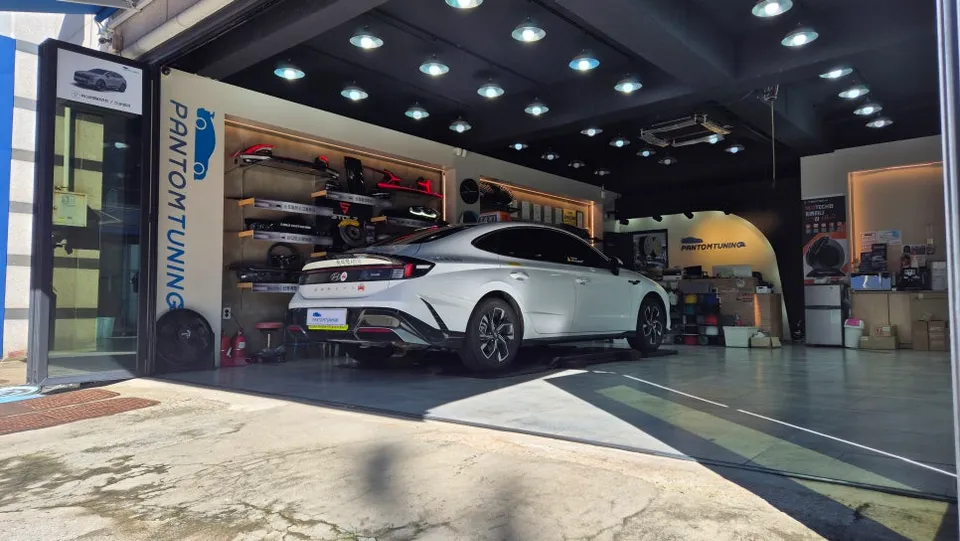
Hyundai Sonata DN8 OEM options (Smart Cruise, Blind Spot) retrofit: approx. ₩1,000,000-₩2,000,000. Enhanced safety and reduced driving fatigue.
Smart Cruise & Blind Spot Systems: Essential Accident Prevention
In the past, vehicle safety primarily focused on protecting occupants after an accident. However, modern vehicles increasingly prioritize active safety technologies that prevent collisions before they happen. Technologies like Smart Cruise Control and Blind Spot Warning, advanced alongside autonomous driving, are crucial for reducing driver fatigue and significantly lowering accident risks. This review details the experience of retrofitting these genuine OEM options onto a Hyundai Sonata DN8.
While passive safety features like seatbelts were once the standard, the value of active safety systems that detect and avoid hazards is now paramount. These systems have evolved with the commercialization of autonomous driving, with Smart Cruise Control and Blind Spot Warning being prime examples. They effectively manage potential accident risks and ease the driver's burden.
Smart Cruise Control automatically maintains a set distance from the vehicle ahead, adjusting speed to reduce fatigue on long drives or in traffic. The Blind Spot Warning system alerts the driver via a warning light on the side mirror when a vehicle approaches in the blind spot, helping to prevent accidents during lane changes.
Genuine Radar Installation Process: A Detailed Look
These active safety functions are primarily enabled by radar sensors. For the Sonata DN8, installing these genuine OEM options involves mounting two radar sensors on the lower rear bumper, one on each side. These sensors continuously monitor vehicles in the rear blind spots, providing accurate information. Unlike aftermarket products that may use ultrasonic sensors, genuine Hyundai radar operates reliably in all weather conditions, offering superior dependability. Using less reliable sensors could lead to dangerous malfunctions, making installation with certified genuine parts essential.
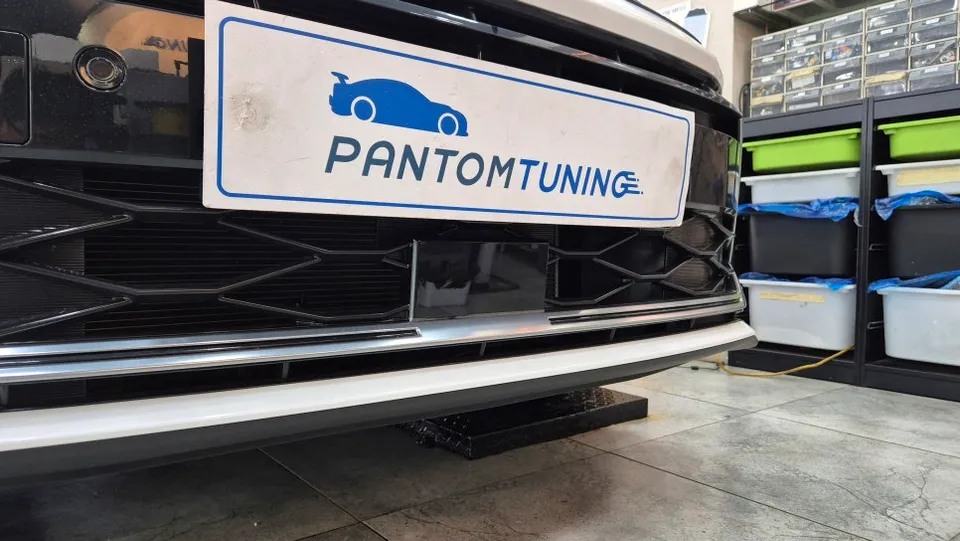
The front radar, located under the front rail, is utilized not only for Smart Cruise Control but also for the Forward Collision-Avoidance Assist. This allows for more precise detection of pedestrians and cyclists. A new button on the left side of the steering wheel also provides convenient control over the distance settings for Smart Cruise Control.
Installation process:
- Mounting of front and rear radar sensors.
- Installation of the new steering wheel control button.
- Wiring and integration of the new modules.
- Calibration of the radar sensors using specialized equipment.
- Final coding and system verification.
After all sensors are installed, a specialized calibration tool is used to precisely align the radar. This ensures each sensor performs optimally. Completing the rear blind spot coding and calibration signifies the end of the installation process.

Experiencing Enhanced Safety: Post-Installation Functionality
After the retrofit, testing the Smart Cruise Control function in real-world driving revealed its ability to accurately detect the vehicle ahead and maintain the set speed and distance. The system’s smooth acceleration and deceleration in traffic significantly reduced driving fatigue.
During driving, a red warning light illuminated on the side mirror when another vehicle approached the blind spot, providing an immediate alert. This allowed for timely and safe adjustments when changing lanes. Similarly, the system enhanced safety during reversing by detecting and warning of potential hazards behind the vehicle.
New options related to 'Rear-Cross Traffic Alert' and 'Blind-Spot Collision-Avoidance Assist' were also activated in the vehicle's settings menu. These genuine OEM features go beyond mere convenience; they are vital safety systems protecting the driver, the vehicle, and everyone around.

Frequently Asked Questions
Q. How much does OEM option and factory upgrade installation cost for a Hyundai Sonata DN8?
In Korea, the retrofit for Smart Cruise Control and Blind Spot Warning on a Hyundai Sonata DN8 typically costs between ₩1,000,000 and ₩2,000,000 (approximately $750-$1500 USD). Actual US pricing may vary significantly based on dealer labor rates and specific package options.
Q. How long does OEM options installation take on a Hyundai Sonata DN8?
The installation of genuine OEM options like radar sensors for Smart Cruise Control and Blind Spot Warning usually takes several hours, often a full business day. These systems are designed for long-term durability, requiring minimal maintenance beyond ensuring sensor cleanliness for optimal performance.
Q. Are OEM options worth adding after purchase for a Hyundai Sonata DN8?
Adding OEM options like Smart Cruise Control and Blind Spot Warning is highly recommended for drivers who frequently use highways or experience heavy traffic, as it significantly enhances safety and comfort. The value proposition lies in the improved driving experience and the substantial reduction in potential accident risks.
Q. How are OEM factory options installed on a Hyundai Sonata DN8?
OEM factory options are installed by mounting genuine radar sensors (front and rear) and integrating new control modules and buttons. The process involves precise wiring, calibration of the sensors using specialized equipment, and final system coding to ensure full functionality.
Q. What is the difference between dealer-installed options and aftermarket upgrades for a Hyundai Sonata DN8?
Dealer-installed OEM options utilize genuine factory parts and are integrated seamlessly with the vehicle's existing systems, ensuring reliability and warranty compliance. Aftermarket upgrades, while potentially cheaper, may lack the same level of integration, performance, and long-term support, making genuine OEM retrofits the recommended choice for safety-critical systems.
OhCar Partner Shop