Porsche Panamera Window Tinting Review: Scratch-Free Reapplicatio
Service Price
$150+
Estimated price · Actual price may vary by shop

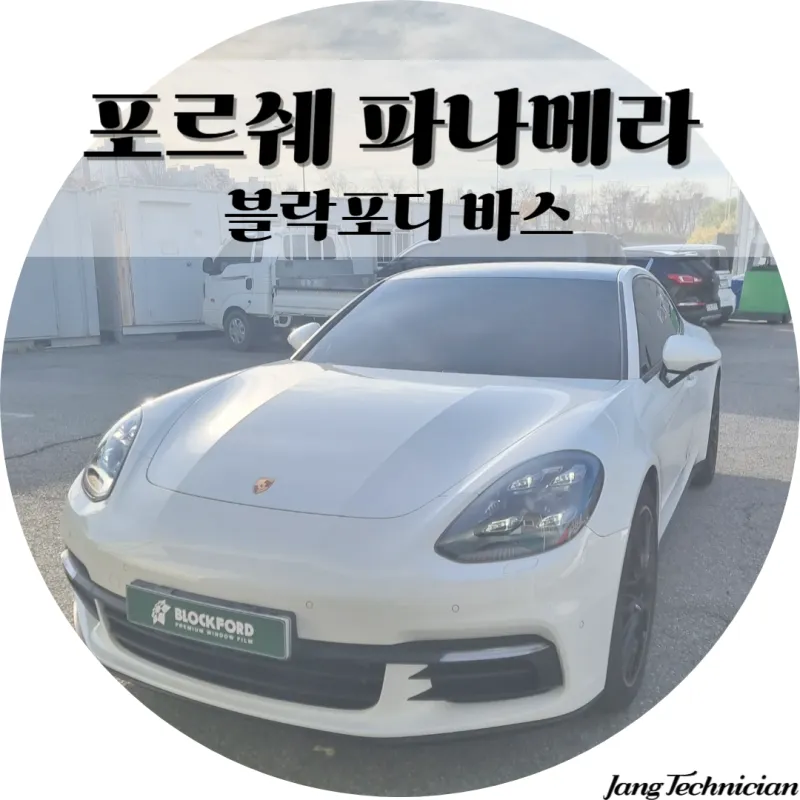
Porsche Panamera window tinting reapplication with felt reinforcement for scratch prevention. Blockfordi Bass film offers 60% heat rejection. 7-year w
Jeonju Window Tinting Reapplication: The True Value of Heat-Rejecting Film
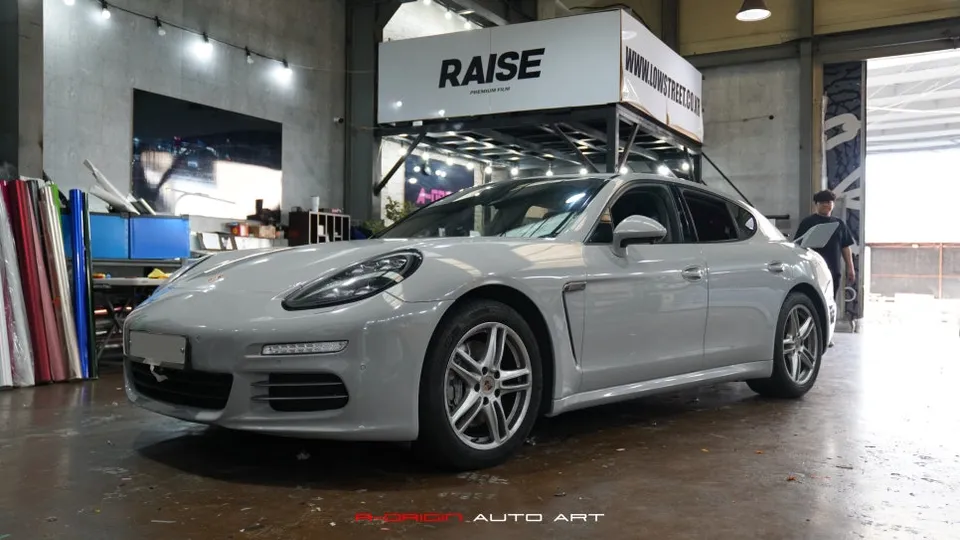
The Porsche Panamera is a dream car for many. However, premium vehicles often require meticulous care during modifications. What if your Jeonju window tinting job starts showing scratches soon after? This is when reapplication becomes a serious consideration. This particular service perfectly addressed the recurring scratch issue on the Panamera. By combining excellent heat rejection with reinforced felt protection, the owner can now enjoy peace of mind. We'll reveal the reapplication process and expert techniques used by Today's Car Jeonju.
Why Panamera Windows Keep Scratching
Despite its luxury, owners of this high-end vehicle share a common frustration: the 'streaking' effect, where visible lines appear on the film. This isn't just an aesthetic problem; it's caused by the window's rubber seals repeatedly scratching the film as it's raised and lowered. Certain car models are more prone to this due to the specific design of their door seals.
Standard window tinting often ends with just film application. However, for luxury imported cars like the Panamera, scratch prevention is a crucial step. In this reapplication, the key was reinforcing the rubber seals with high-quality felt, significantly reducing future scratches.
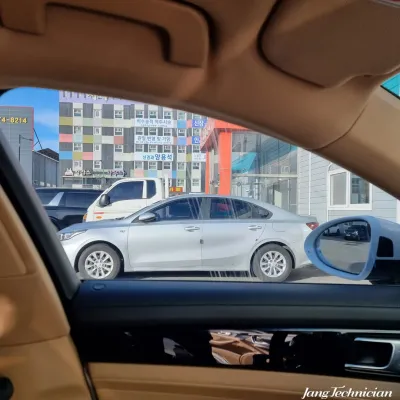
Thorough Preparation Before Reapplication
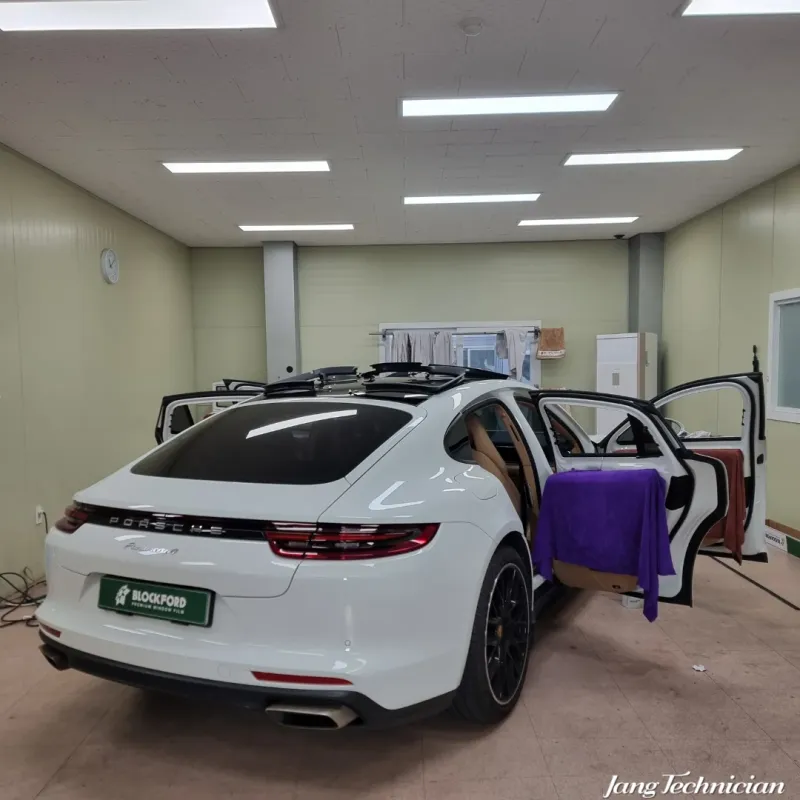
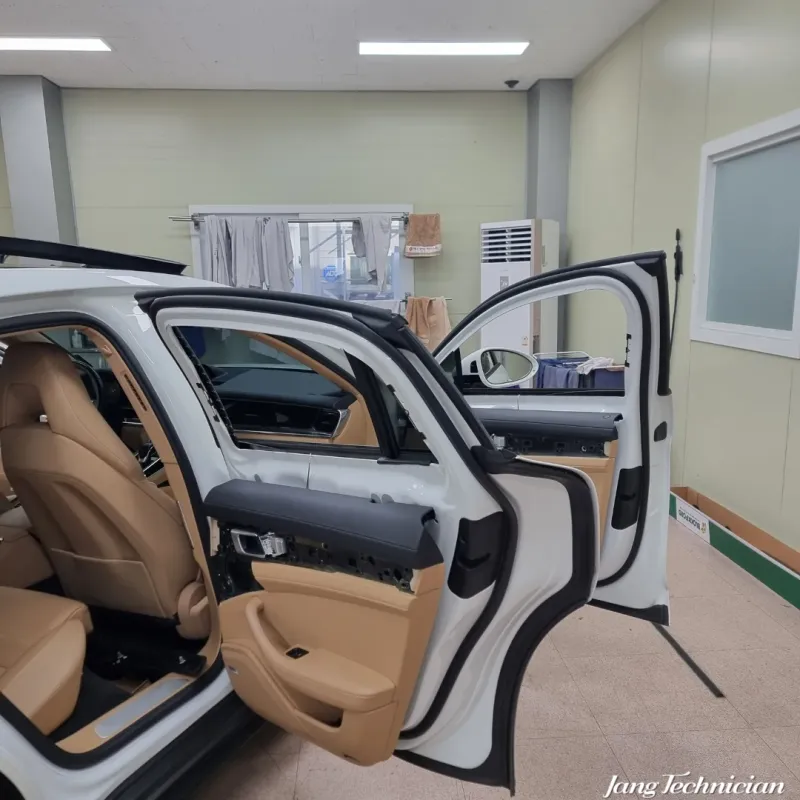
Reapplication begins with the removal of the existing film. Lingering adhesive can make this process more time-consuming. The expert at Today's Car Jeonju carefully removed the door trim first, as any damage to the panels during this stage can devalue the vehicle.
Once the door trim is off, the rubber seals are exposed. These seemingly minor components are critical to the entire job's success. The type of felt applied here directly impacts how well future scratches are prevented.
The Core of Felt Reinforcement
The process starts with degreasing the rubber seals to remove any dirt or oils. Skipping this step can lead to the felt peeling off, as it relies on a clean surface for proper adhesion. The specialist meticulously cleaned the area with a special solution.
Next, the felt is precisely cut to size. Accuracy is paramount; even a slight deviation can cause issues later. After cutting, the felt is adhered using heat. A heat gun is used to ensure the felt is firmly bonded to the rubber seal. This felt application alone took approximately 2 hours.
Once the felt work is complete, the door trim is reinstalled. This is done carefully, checking for any potential damage that might have occurred during removal. Only then does the actual window tinting application begin.
Perfect Heat Rejection with Blockfordi Film
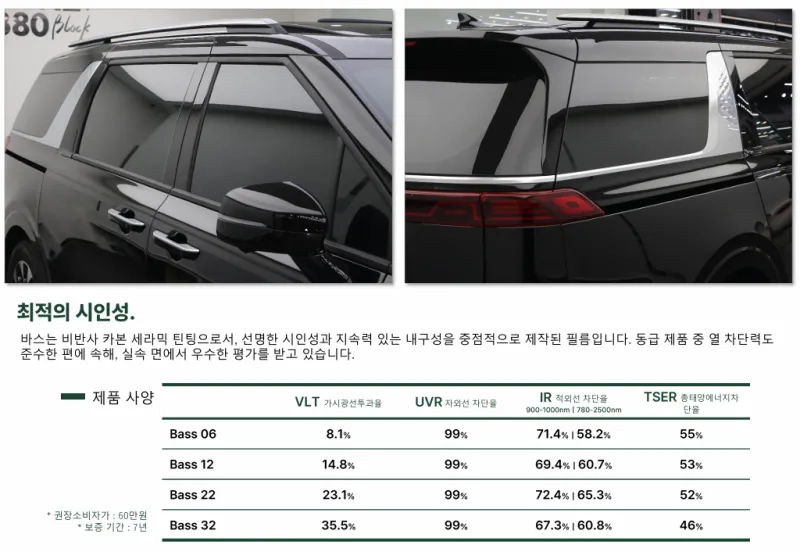
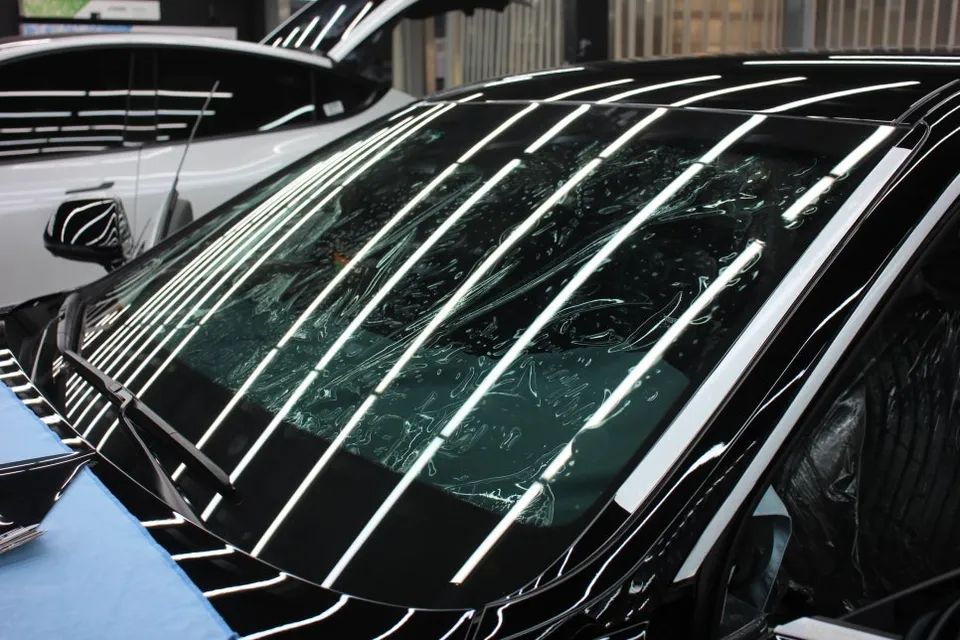
The film used for this service was Blockfordi Bass, a mid-range film offering around 60% heat rejection. Let's clarify what car window tinting (or 'tinting') actually does. It involves applying a special film to your car windows to block or reduce UV rays, IR rays, heat, and glare. It's not just about making the windows darker.
This film effectively lowers the interior temperature of a car on hot summer days and blocks harmful UV rays that can damage skin. The Blockfordi film features a non-reflective black finish, providing a premium look while delivering excellent heat rejection. Its 7-year warranty further underscores its quality and reliability.
The customer had a specific request: to match the tint darkness of their previous film. Since their previous tint was Bass 22%, the front and rear side windows were applied with the same 22% VLT (Visible Light Transmission) for a uniform look.
Frequently Asked Questions
Q. How much does window tinting cost for a Porsche Panamera?
This specific reapplication service, including advanced felt reinforcement, was performed in Korea. Typical professional window tinting for a Porsche Panamera in the US can range from $400 to $1000 depending on the film quality and complexity.
Q. What tint percentage is legal for a Porsche Panamera?
Window tint legality varies significantly by state in the US. Generally, front side windows are often restricted to 70% VLT, while rear windows can be darker. Always check your local regulations before installation.
Q. Is ceramic tint worth the extra cost for a Porsche Panamera?
Ceramic tint is highly recommended for luxury vehicles like the Panamera due to its superior heat rejection and UV protection without interfering with electronics. It offers the best long-term value for comfort and preserving the interior.
Q. How is window tint installed on a Porsche Panamera?
Installation involves meticulous preparation: 1. Removing door trim and old film. 2. Cleaning and degreasing rubber seals. 3. Applying and heat-molding felt to seals. 4. Applying the new window film to the glass. 5. Trimming excess film and reassembling trim.
Q. What is the difference between ceramic and dyed window tint for a Porsche Panamera?
Ceramic tint uses non-conductive ceramic particles for excellent heat rejection and UV blocking without signal interference, while dyed tint uses coloring that can fade and offer less protection. Ceramic tint is a premium, long-lasting choice for high-end vehicles.
Today's Car
More window tinting Reviews
See all →
More Porsche Reviews
Pair with Another Service
Protect paint while you're at the shop
Add gloss and protection