Audi Q7 PPF Review: Chrome Delete & Full Wrap

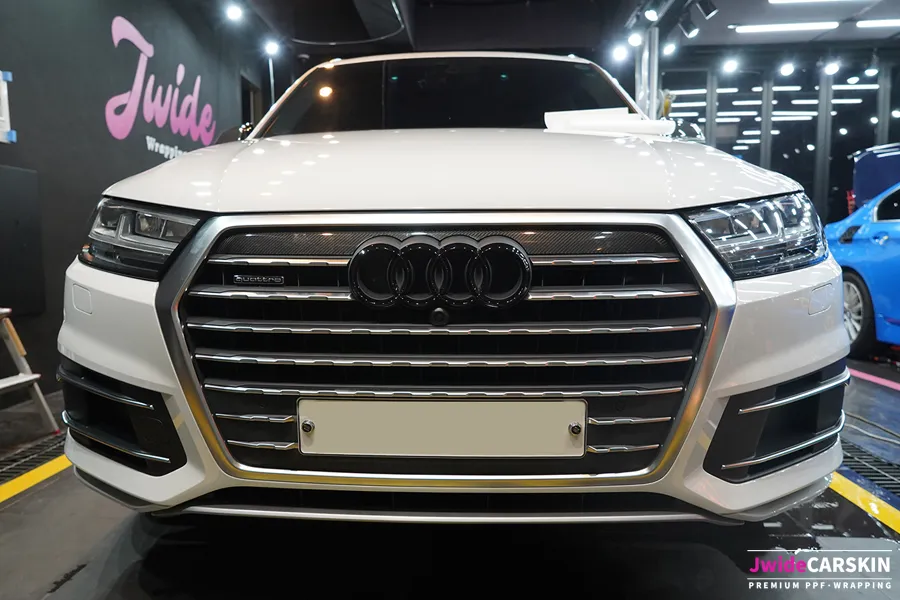
Audi Q7 PPF and chrome delete service in Gwanggyo, Korea. Enhanced protection and a sleek matte black finish.
Audi Q7 Transformation: Beyond Standard Protection
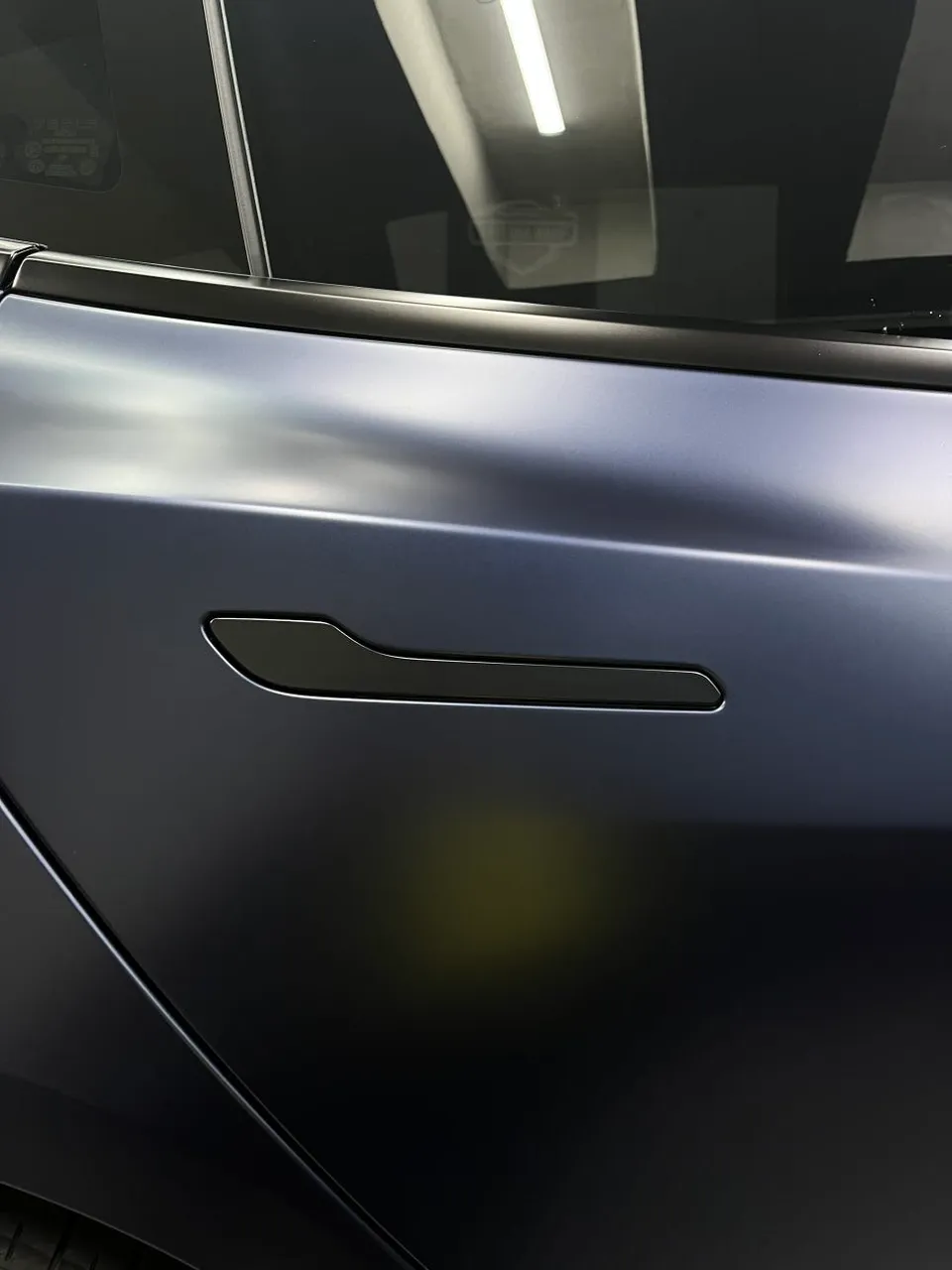
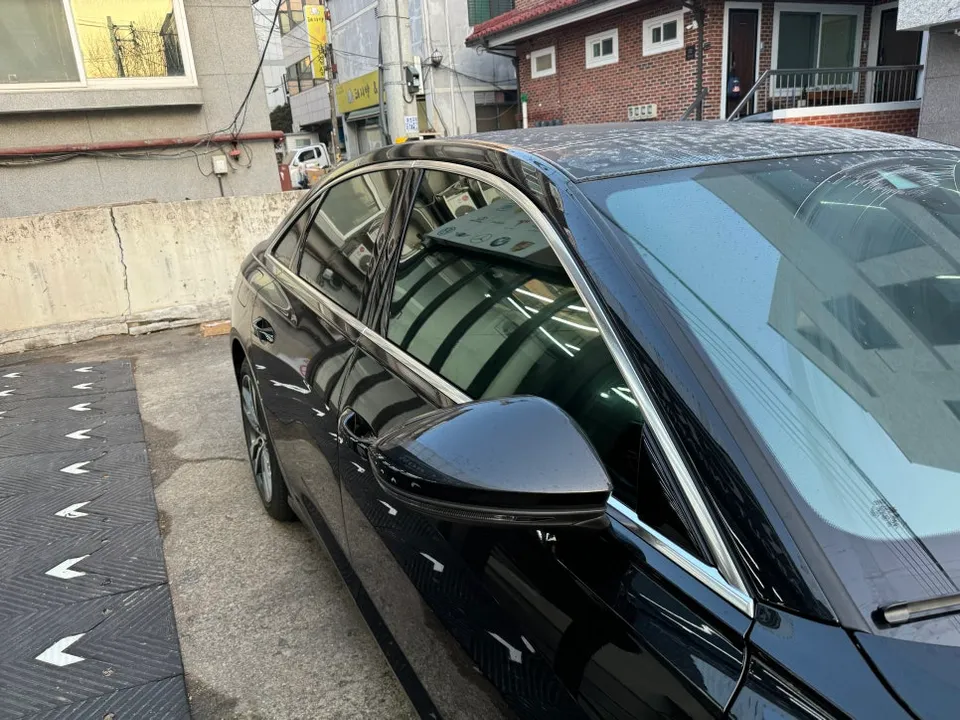
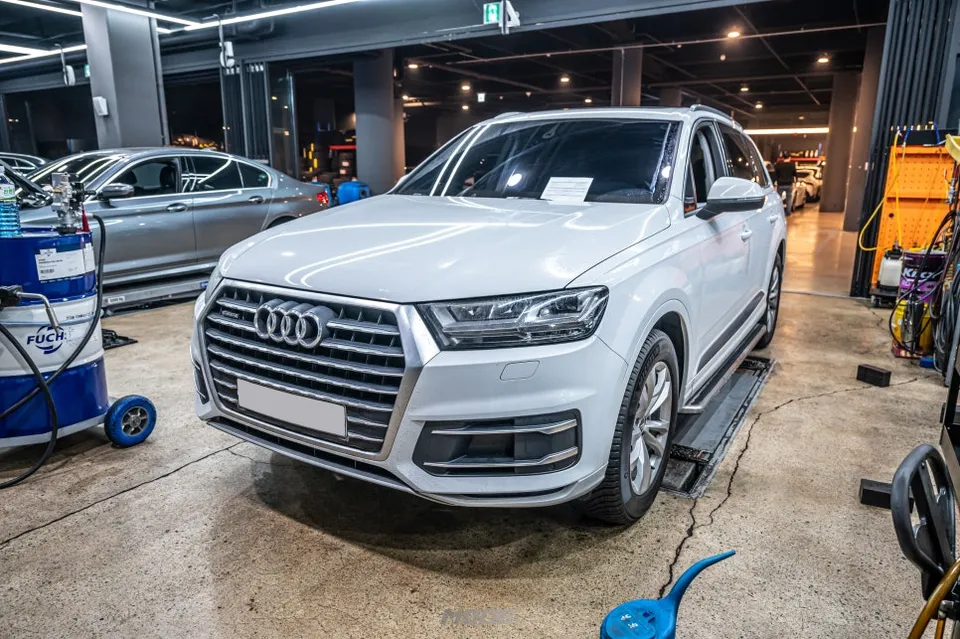
This Audi Q7 underwent a significant aesthetic and protective upgrade, focusing on a full vehicle wrap with Paint Protection Film (PPF) and a "chrome delete" treatment. The goal was to enhance the vehicle's visual appeal while providing robust protection against the elements. The "chrome delete" specifically targets the often-bright chrome accents found on luxury vehicles like the Q7, replacing them with a sleek, matte black finish that creates a more aggressive and unified look. This process not only modernizes the vehicle's appearance but also adds a layer of protection to these trim pieces.
The Paint Protection Film (PPF) Advantage
Paint Protection Film, often referred to as clear bra, is a transparent, elastomeric polyurethane film applied to painted surfaces of a vehicle. Its primary purpose is to protect the vehicle's paint from damage caused by stone chips, scratches, bug splatters, road tar, and other environmental contaminants. Unlike traditional waxes or sealants, PPF offers a physical barrier that absorbs the impact of road debris, preventing chips and scratches from reaching the paintwork. The film applied in this review is designed to be virtually invisible, preserving the original finish of the Audi Q7 while adding a significant layer of defense. This is particularly beneficial for larger SUVs like the Q7, which are more prone to damage from highway driving.
Installation Process: Precision and Care
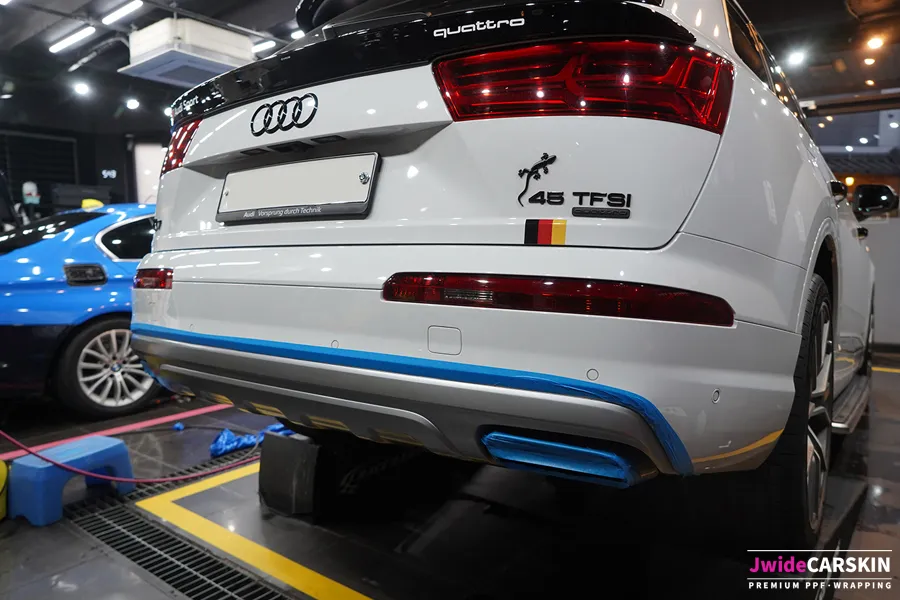
The application of PPF and the chrome delete requires meticulous attention to detail and professional expertise. The process involves several key stages to ensure a flawless finish and optimal adhesion.
- Surface Preparation: The vehicle's surface is thoroughly cleaned and decontaminated to remove any dirt, oils, or residues. This step is crucial for ensuring the film adheres properly and prevents imperfections.
- Pattern Cutting: High-precision plotters are used to cut the PPF to the exact specifications of the Audi Q7's panels. For complex curves and edges, templates are often created and refined by hand.
- Application: The film is carefully applied to the vehicle's surface, using specialized tools and solutions to eliminate air bubbles and ensure a smooth, wrinkle-free finish. The chrome trim pieces are wrapped with a matte black vinyl film.
- Finishing Touches: Edges are meticulously tucked and sealed, and the film is inspected for any imperfections. A heat gun is often used to help the film conform to the vehicle's contours and activate its self-healing properties.
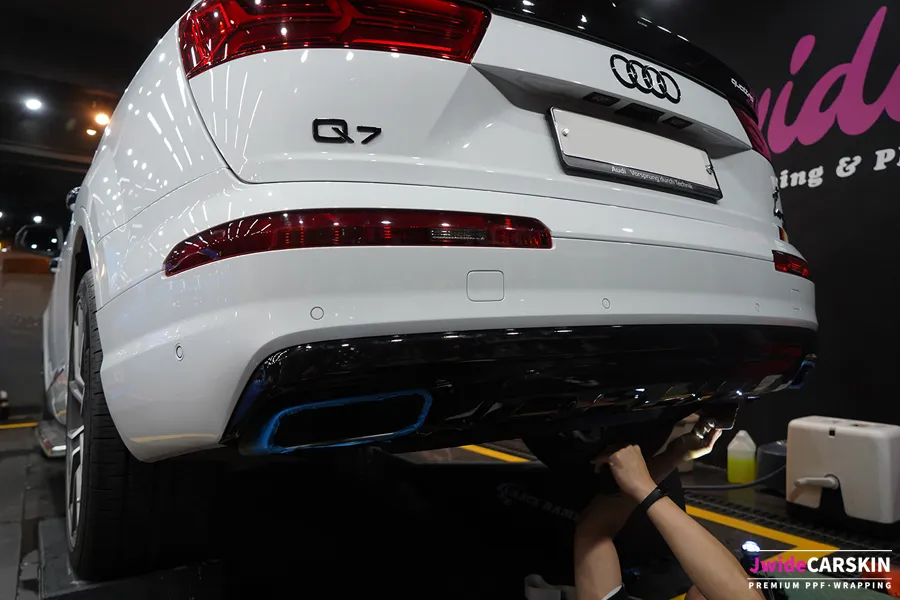
The result is a seamless integration of the PPF and the new matte black trim, providing both aesthetic enhancement and superior paint protection for the Audi Q7.
Frequently Asked Questions
Q. How much does PPF cost for an Audi Q7?
The cost for this specific Audi Q7 PPF and chrome delete service in Gwanggyo was not explicitly stated in Korean Won but typically ranges from $2,000 to $7,000 in the US, depending on the coverage area and film quality.
Q. How long does PPF last on an Audi Q7?
High-quality PPF can last for 5 to 10 years, offering long-term protection for your Audi Q7's paint. Regular washing and occasional application of a PPF-specific sealant can help maintain its clarity and hydrophobic properties.
Q. Is PPF worth it for an Audi Q7?
PPF is highly recommended for owners who want to preserve their Audi Q7's pristine condition and resale value, especially those frequently exposed to road debris. It offers superior protection against physical damage compared to other coatings.
Q. How is PPF installed on an Audi Q7?
PPF installation involves meticulous surface preparation, precise pattern cutting for each panel, careful application using specialized tools and solutions to avoid bubbles, and final finishing touches like edge sealing and curing.
Q. What is the difference between PPF and ceramic coating for an Audi Q7?
PPF provides a physical, sacrificial layer that protects against impact damage like stone chips and scratches, while ceramic coating offers a harder, chemical-resistant layer that enhances gloss and provides hydrophobic properties but offers minimal physical protection. For comprehensive protection, PPF is the superior choice against physical damage.
OhCar Partner Shop
More ppf Reviews
See all →


More Audi Reviews

Pair with Another Service
Add hydrophobic protection on top of PPF
Complete your new car protection package