Mercedes-Benz CLS PPF Review — ₩500K-1M Protection
Service Price
$150+
Estimated price · Actual price may vary by shop

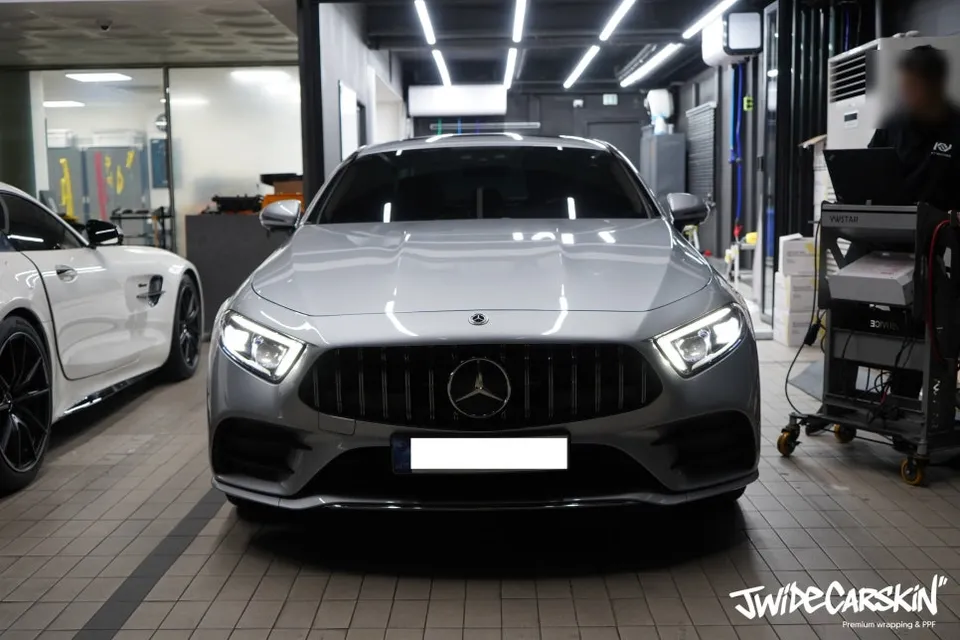
Partial PPF on Mercedes-Benz CLS: ₩500K-1M. Eliminates daily micro-scratches on door cups, chrome trim, and headlight bezels.
Protecting Your Mercedes-Benz CLS: The Value of Paint Protection Film (PPF)
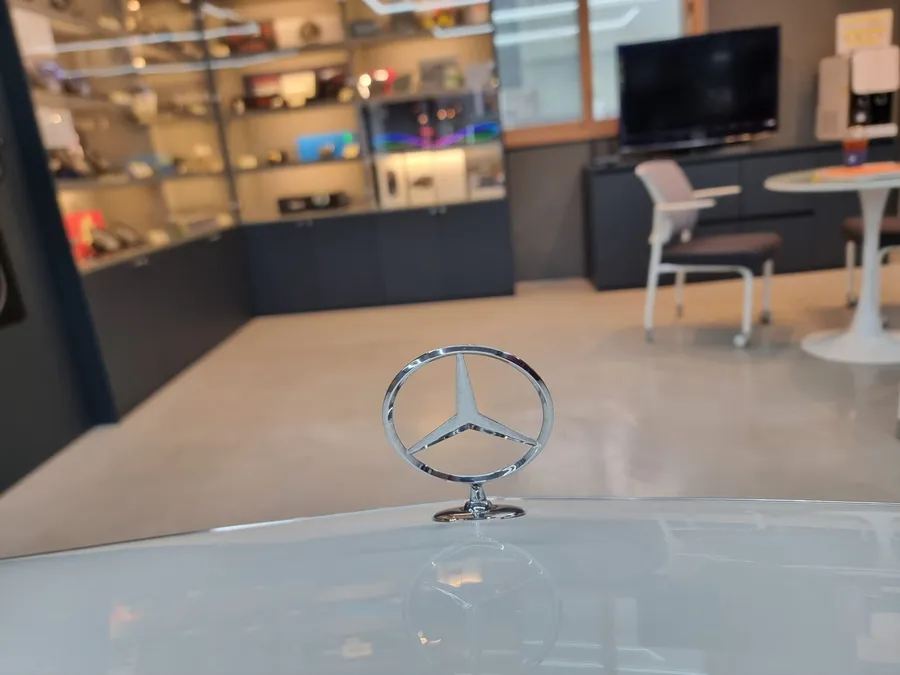
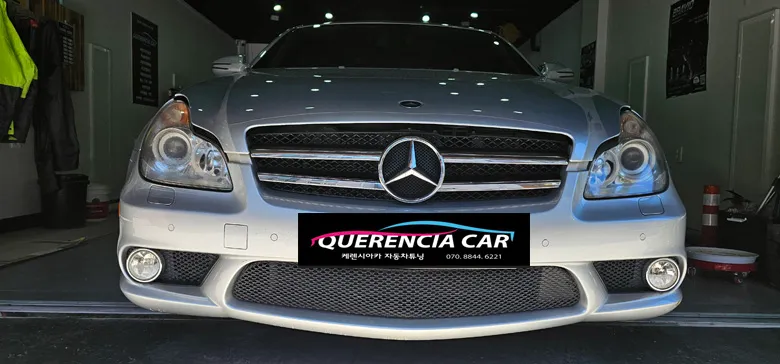
When you invest in a premium vehicle like the Mercedes-Benz CLS, maintaining its pristine condition is paramount. Even after a couple of months of ownership, many drivers find themselves concerned about minor imperfections. For a car with the CLS's sophisticated design, featuring prominent chrome accents and intricate body lines, even the smallest scratches can be highly noticeable. This review focuses on a partial PPF (Paint Protection Film) application, also known as a clear bra, performed in the Gwanggyo area, designed to address these everyday concerns.
Understanding PPF: Full vs. Partial Application
When considering PPF, the primary decision is between a full or partial application. Each offers distinct benefits and cost implications.
Full PPF wraps the entire vehicle in a protective film. This offers the highest level of protection, safeguarding the car's finish comprehensively against a wide range of potential damage. The main drawbacks are the significant cost, typically ranging from 2 to 3.5 million Korean Won for a mid-size import sedan, and the potential for visible film edges.
Partial PPF, often referred to as a 'lifestyle protection film,' targets specific high-risk areas prone to damage from daily driving. This includes areas like door handle cups, headlights, and wheel arches. The primary advantage is its cost-effectiveness, usually falling between 500,000 and 1 million Korean Won. However, it's crucial to understand that the protection is limited to the applied areas.
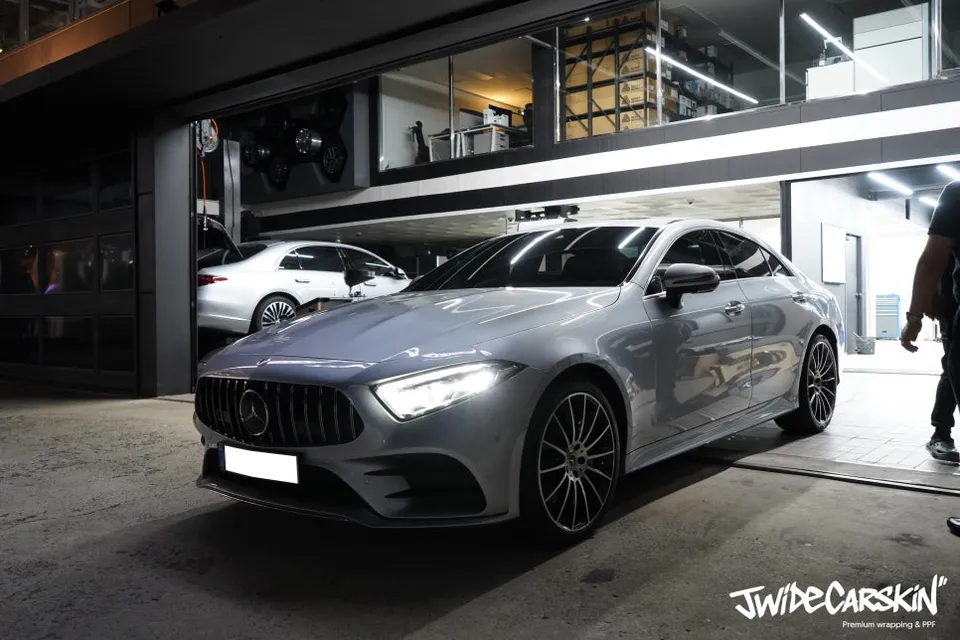
High-Risk Zones on the CLS: Door Cups and Headlights
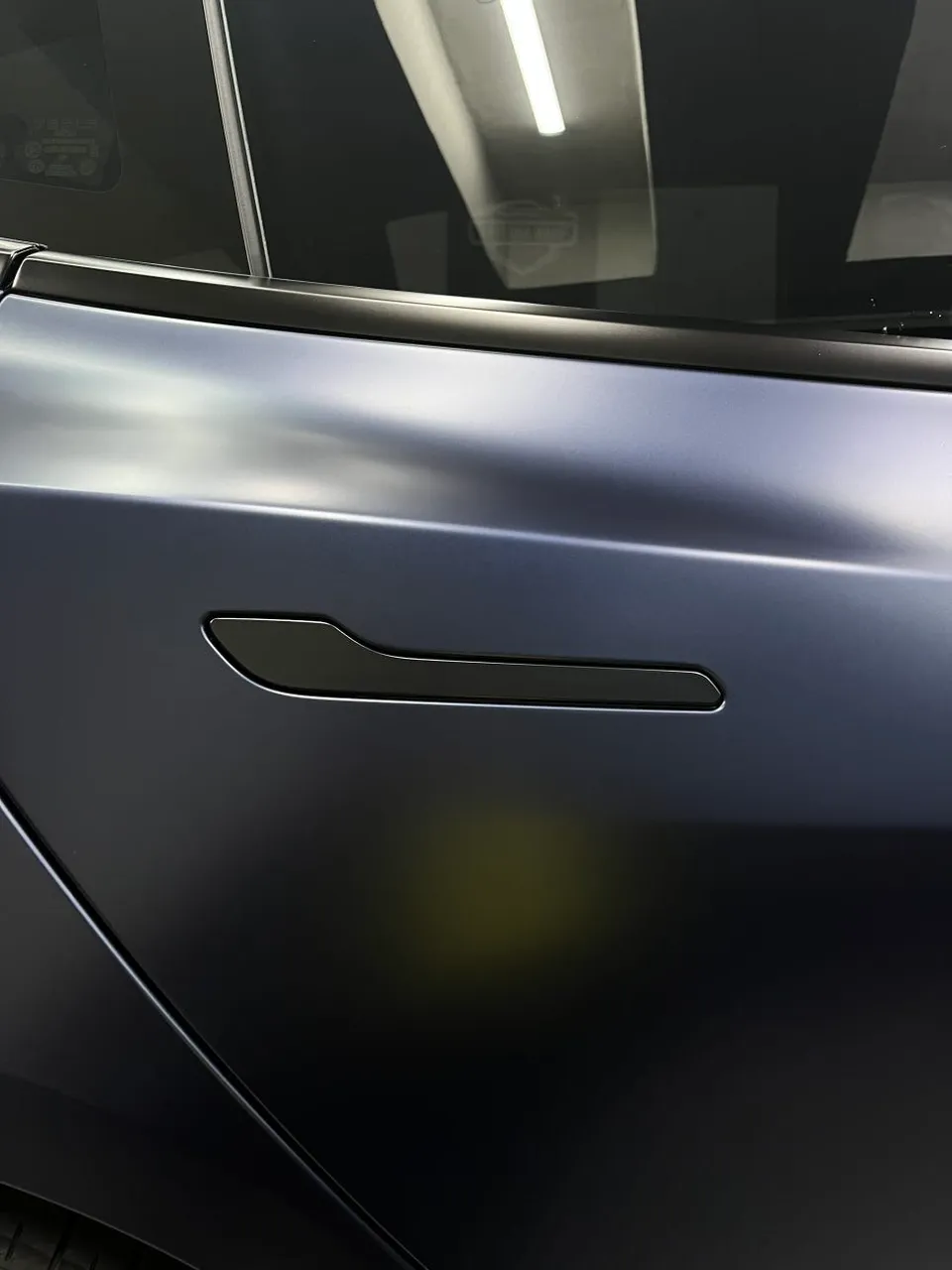
The CLS's design makes certain areas particularly vulnerable. The door cup area, located around the door handles, is frequently exposed to fingernails. Over time, these minor abrasions can accumulate, creating a web of fine scratches that can make the car appear older than it is.
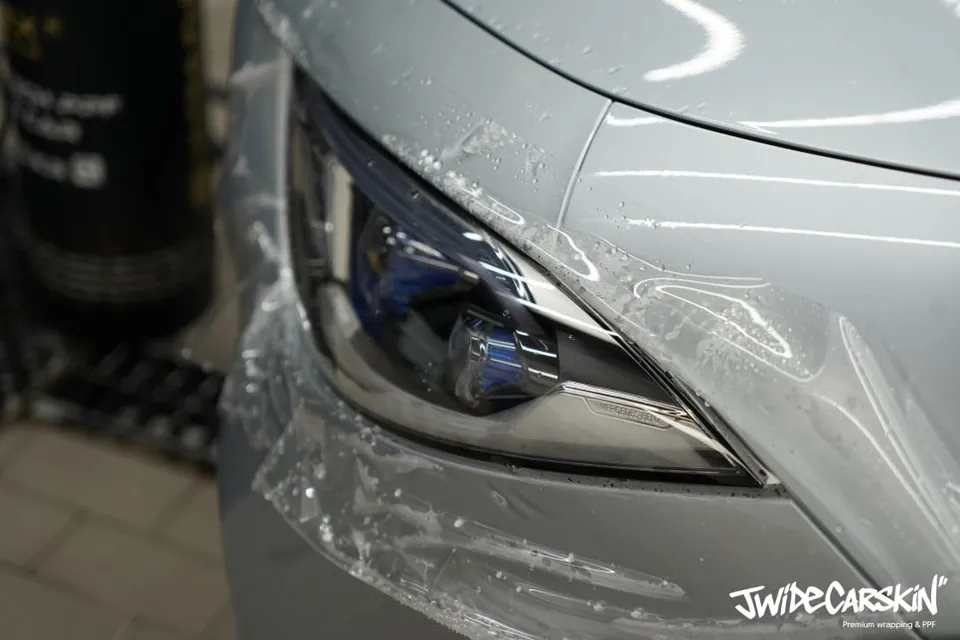
Headlights are susceptible to damage from temperature fluctuations and impacts. The CLS features complex curves on its lighting units, making them prone to cracking from stone chips. Heat can also cause deformation, highlighting the importance of proactive protection.
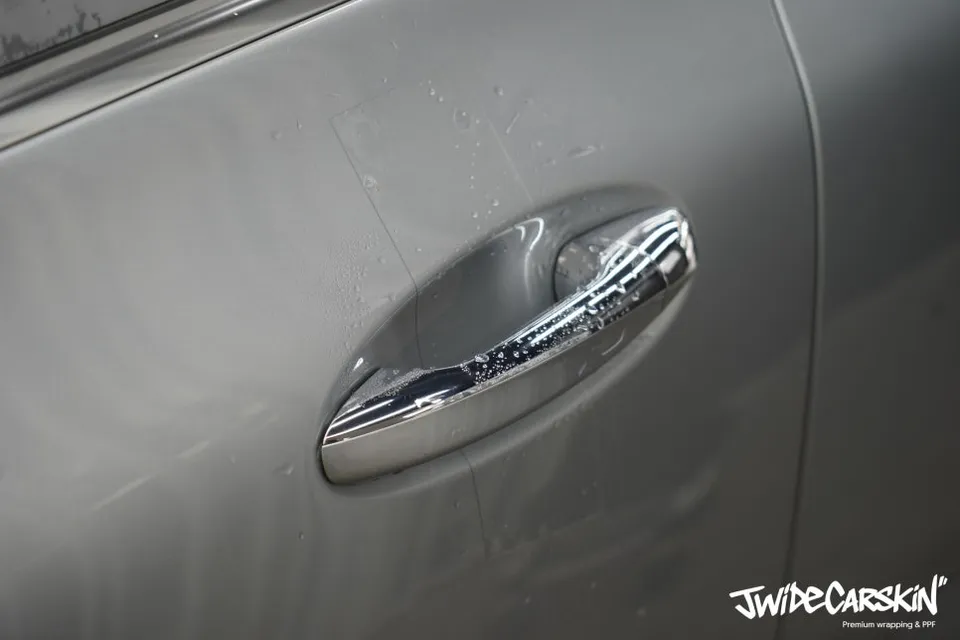
Installation Process: Precision and Natural Finish
The partial PPF service at Today's Car Gwanggyo focused on two critical areas: the door cups and headlights, emphasizing precision and a seamless integration with the vehicle's original aesthetics.
- Pattern Creation and Cutting: Digital patterns are precisely cut for each specific area, such as the door cup. For the CLS's door cups, the pattern was meticulously adjusted multiple times to perfectly match the panel's contours and the car's color tone.
- Film Application: The PPF is carefully applied to the pre-cut pattern, ensuring smooth adhesion without air bubbles or imperfections. Special attention is paid to the edges to create a factory-like finish.
- Heat Application and Stretching: For curved surfaces like headlights, controlled heat is used to gently stretch and conform the film, preventing distortion and ensuring it follows the original lines of the component.
- Edge Finishing and Inspection: Excess film is trimmed, and all edges are meticulously sealed. Any residual moisture is removed, and a thorough inspection is conducted to ensure a flawless, invisible finish.
The result is a finish that is virtually indistinguishable from the original paintwork. This is the true essence of a 'lifestyle protection film' – preventing damage from daily use without altering the vehicle's appearance.
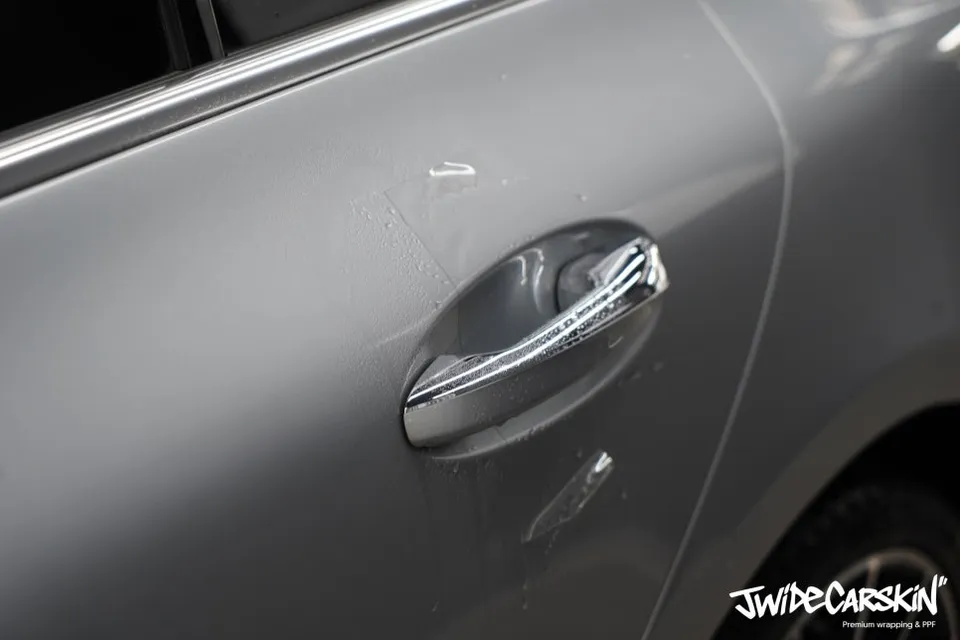
Results and Cost Comparison
The application on the CLS's headlights was executed with similar care. Given the complex curvature, maintaining the integrity of the light's design while applying the film required precise tension control across varying temperature zones. The goal was to protect without compromising the aesthetic lines.
Throughout the process, multiple quality checks were performed, including meticulous cleaning of any water residue along panel edges. The final handover to the client was met with surprise; they remarked that they couldn't tell where the film had been applied without being shown, a testament to the natural and invisible finish achieved.
In terms of cost, partial PPF typically ranges from 500,000 to 1 million Korean Won. Focusing on key vulnerable areas like the door cups, headlights, and door handles often falls within the 600,000 to 800,000 Korean Won range, offering a cost-effective solution for protecting your investment against the common wear and tear of daily driving.
Frequently Asked Questions
Q. How much does partial PPF cost for a Mercedes-Benz CLS?
This review's partial PPF installation in South Korea ranges ₩500K-1M (~$375-$750 USD) for door handles, headlights, and trim protection. In the US, comparable partial PPF on luxury sedans typically costs $600-$1,200 depending on coverage area and film quality.
Q. How long does PPF last on a Mercedes-Benz CLS?
Quality paint protection film lasts 5-10 years depending on climate and maintenance, with premium films offering self-healing properties for minor scratches. Wash gently every 2 weeks and avoid harsh chemicals to maximize longevity and clarity.
Q. Is PPF worth it for a Mercedes-Benz CLS?
Yes, especially for luxury sedans where minor scratches significantly impact resale value and visual appeal—the CLS's deep chrome trim and design lines make even micro-scratches visible. Partial PPF protects high-risk areas (door handles, headlights) for 30-40% of full-wrap cost, making it the practical choice for daily-driver owners.
Q. Where do daily scratches most commonly occur on a Mercedes-Benz CLS?
Door cup handles, headlight bezels, door trim edges, and wheel arches accumulate the most visible daily damage from fingernails, clothing, and parking lot contact. These high-touch zones justify targeted partial PPF investment over full-body coverage.
Q. What's the difference between full PPF and partial PPF?
Full PPF wraps the entire body (₩2-3.5M in Korea, $2,500-$5,000+ in US) for complete protection, while partial PPF covers only vulnerable areas (₩500K-1M in Korea, $600-$1,200 in US) like handles and trim. Partial PPF is ideal for owners prioritizing daily-use protection over flawless resale condition.
Q. Does PPF affect the appearance of a Mercedes-Benz CLS?
High-quality PPF is nearly invisible when properly installed, maintaining the original paint's depth and gloss. Cheap or poorly-installed film can appear cloudy or create visible seams, particularly noticeable on the CLS's glossy surfaces and chrome accents.
OhCar Partner Shop
More ppf Reviews
See all →

More Mercedes-Benz Reviews
Pair with Another Service
Add hydrophobic protection on top of PPF
Complete your new car protection package