Hyundai Casper Electric Vinyl Wrap Review: Cost & Results
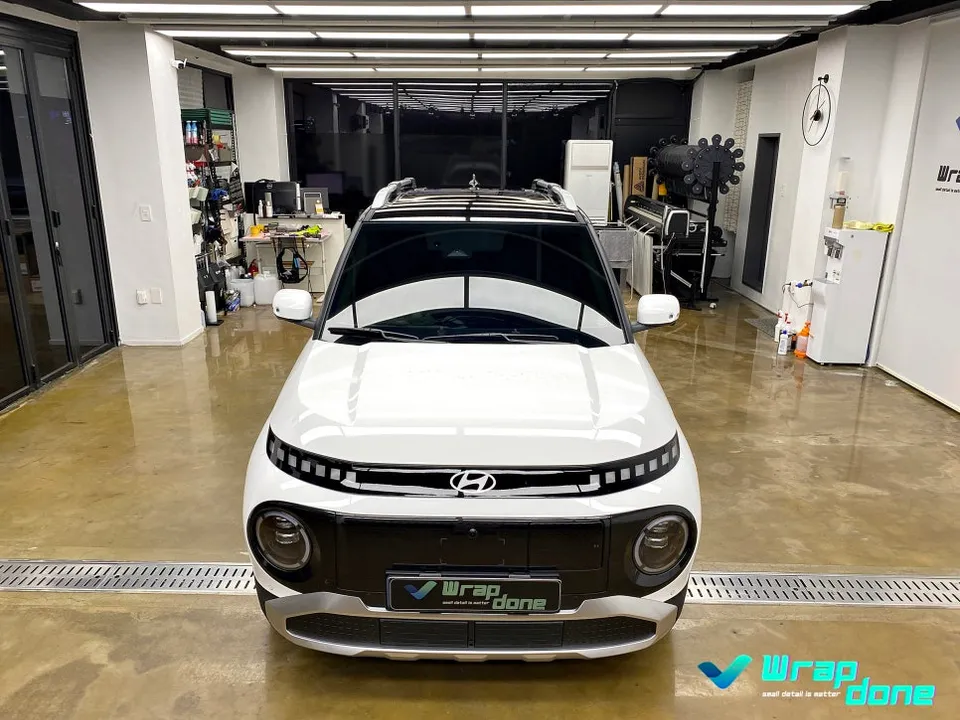
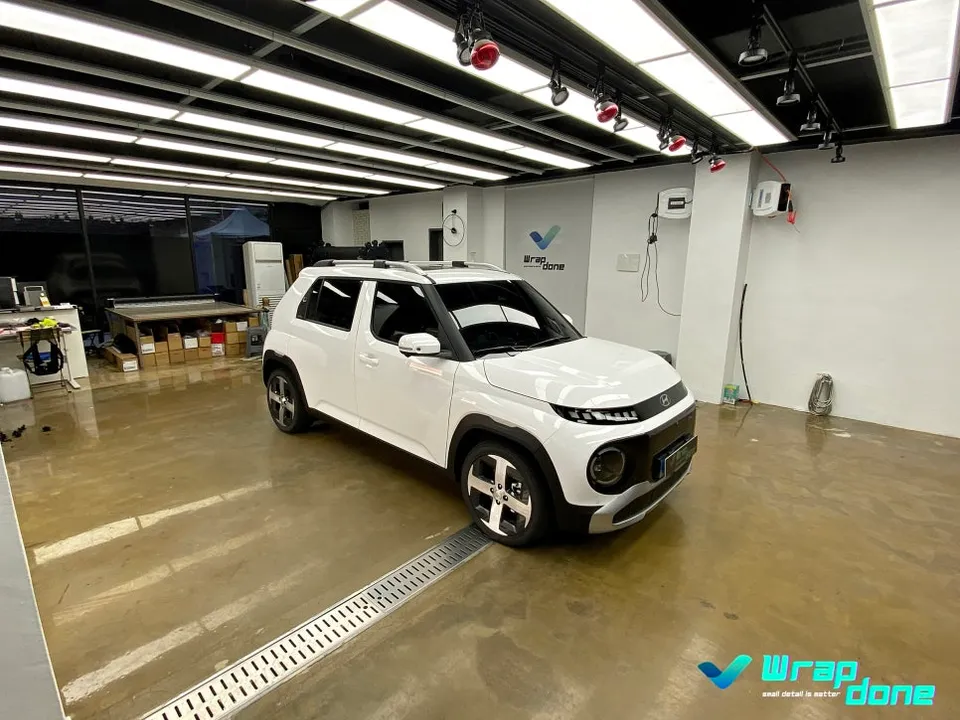
Hyundai Casper Electric vinyl wrap: Approx. ₩1.5M-₩3M ($1100-$2200). Customizes look, protects paint.
Why Choose a Vinyl Wrap for Your Hyundai Casper Electric?
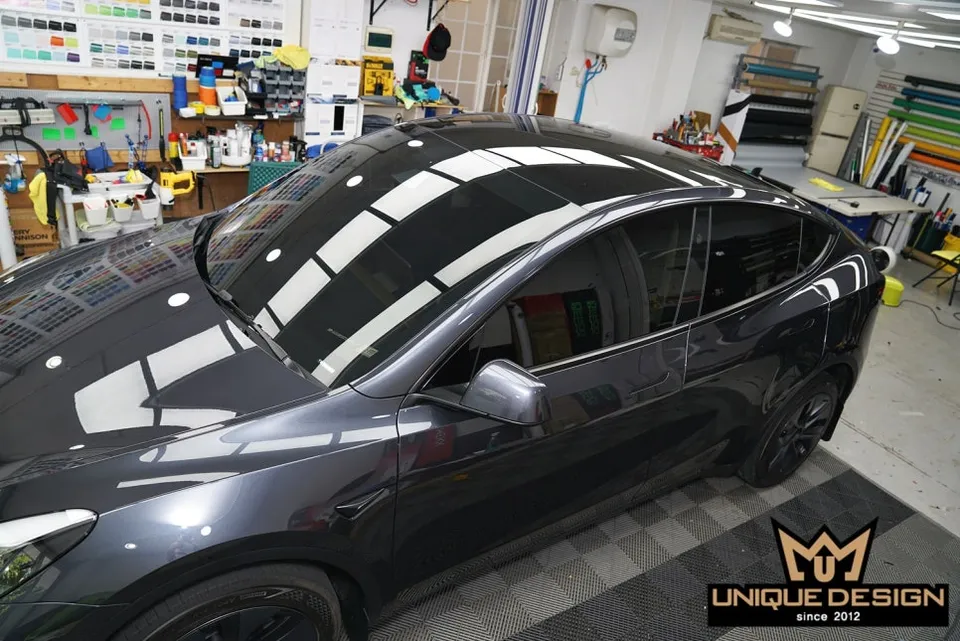
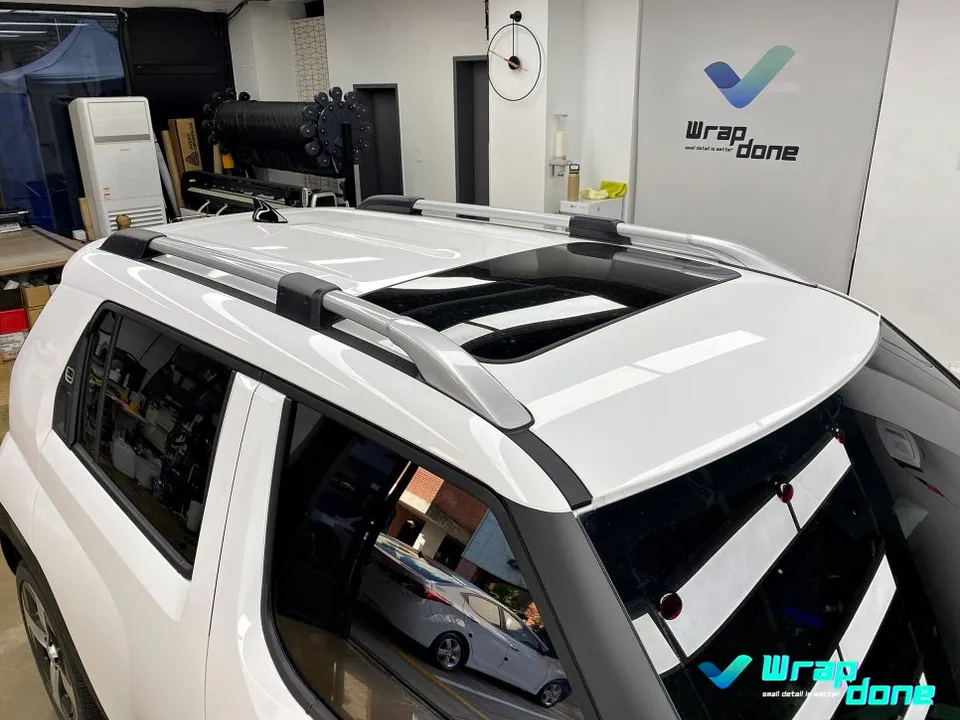
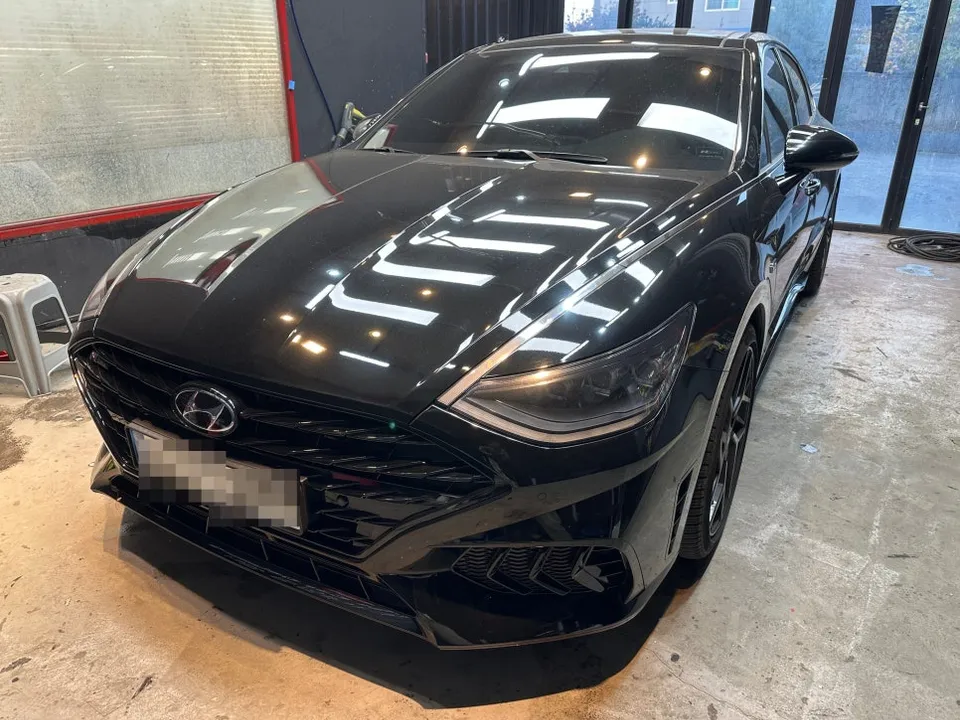
Many Hyundai Casper Electric owners consider the factory two-tone roof option but are hesitant because it often means sacrificing the sunroof. Vinyl wrapping offers a compelling solution, allowing you to achieve a custom two-tone look while keeping your sunroof intact. This popular service enhances the vehicle's appeal, and with a vinyl wrap, you can personalize your Casper Electric beyond factory limitations. For instance, extending a black wrap to the A-pillars can create a more cohesive and sophisticated appearance, blending the roofline seamlessly with the rest of the car. This level of customization is a key reason why many opt for a professional wrap over factory options.
The term "roof skin" in this context refers to the application of vinyl to the vehicle's roof panel, typically bordered by the roof rack or molding. When the A-pillars are already black, wrapping them along with the roof can significantly boost the car's integrated and stylish look. Of course, a wrap can be applied to the roof section alone if that's your preference. The primary advantage for Casper Electric owners is the ability to get a two-tone design without compromising the sunroof, a limitation of the OEM two-tone roof package. This flexibility allows for a truly personalized aesthetic.
Hyundai Casper Electric Vinyl Wrap Installation Process
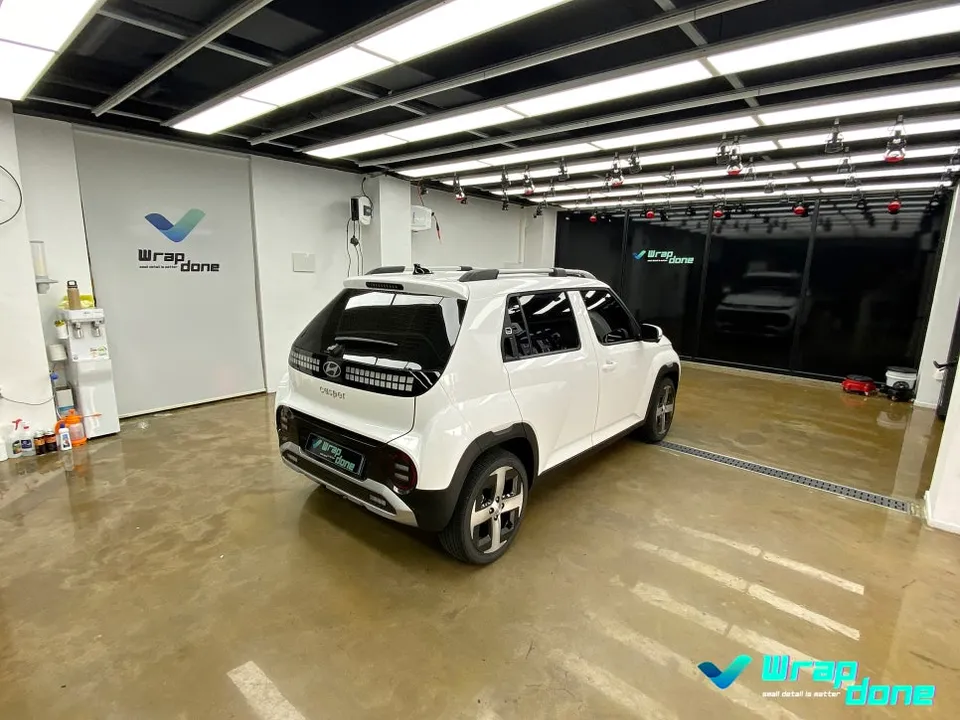
A high-quality vinyl wrap installation begins with meticulous preparation. The process starts with carefully removing any necessary trim pieces to ensure a clean and seamless application. Even on new vehicles, a thorough pre-treatment is essential. This includes washing the car, using a clay bar to remove contaminants, degreasing the surface, and ensuring it's completely dry. This detailed preparation is crucial for the vinyl's adhesion and the overall finish quality.
To ensure a dust-free environment, the surrounding area is often cleaned, and the floor may be lightly misted with water. Masking around the windows is done meticulously, tucking the tape inside to protect the paint and facilitate film application. The importance of this pre-treatment cannot be overstated, as it directly impacts the wrap's longevity and the final aesthetic.
Attention to detail is paramount during the finishing stages. For areas like the top of the trunk, which resembles a spoiler, the vinyl is often applied in sections to minimize stretching and ensure a secure fit. While a single-piece application is possible, a slight, well-executed overlap in less visible areas provides a more durable and visually seamless result. The vinyl is carefully tucked deep inside the window frames for a factory-like finish and to prevent peeling when doors are opened. Design tape is sometimes used to protect the paint edge during cutting, preventing accidental scratches.
Complex curves, such as those on the quarter panels or along the window lines, require precise application. Wrapping these areas can increase the amount of vinyl used and may affect the overall cost. The installation extends to the B-pillar door pillars, enhancing the design's completeness. Notably, the Casper Electric's window lines are consistent, allowing for a more uniform and aesthetically pleasing two-tone design compared to some other models.
Vinyl Wrap Durability, Maintenance, and Value
A professionally installed vinyl wrap can last anywhere from 3 to 5 years, depending on the quality of the film used and how well it's maintained. High-quality films are designed to withstand UV rays and daily driving conditions. Regular cleaning is key to preserving the wrap's appearance and lifespan. Washing the car with mild soap and water and avoiding abrasive materials or high-pressure washers will help prevent damage. It's also advisable to avoid automatic car washes that use harsh brushes.
When considering a vinyl wrap as a paint alternative, it's important to weigh the pros and cons. A wrap is a non-permanent solution that protects the original paintwork underneath. If you decide to remove it, your car's paint should be in excellent condition. However, removing a wrap that has been on for a long time, or one that was poorly installed, can sometimes pull off paint, especially if the original paint was already damaged or poorly applied. The cost of a full color change wrap can range significantly, but for a vehicle like the Hyundai Casper Electric, you might expect costs in the range of ₩1,500,000 to ₩3,000,000 (approximately $1,100 - $2,200 USD), depending on the film chosen and the complexity of the design.
Ultimately, whether a vinyl wrap is worth it depends on your priorities. If you seek a temporary, customizable aesthetic change that also offers paint protection, a wrap is an excellent option. It allows you to experiment with different looks without the commitment or cost of a full repaint. For the Hyundai Casper Electric, a two-tone roof wrap, especially when combined with A-pillar wrapping, offers a significant visual upgrade that can make your electric vehicle stand out.
Frequently Asked Questions
Q. How much does a vinyl wrap cost for a Hyundai Casper Electric?
In Korea, a vinyl wrap for a Hyundai Casper Electric typically ranges from ₩1,500,000 to ₩3,000,000 (approximately $1,100 - $2,200 USD), depending on the film and complexity. Prices can vary significantly based on the specific shop and materials used in the US and UK.
Q. How long does a vinyl wrap last on a Hyundai Casper Electric?
A quality vinyl wrap can last between 3 to 5 years with proper care. To maximize its lifespan, regularly wash the vehicle with mild soap and water, and avoid abrasive cleaners or high-pressure washing.
Q. Does vinyl wrap damage paint on a Hyundai Casper Electric?
When applied and removed correctly by professionals, vinyl wrap generally does not damage the original paint. However, poorly installed wraps or removal after extended periods on compromised paint can potentially cause damage.
Q. How is vinyl wrap applied to a Hyundai Casper Electric?
Installation involves meticulous surface preparation, including thorough cleaning and degreasing. 1. The vinyl film is then carefully cut and applied to the vehicle's panels, often using heat to conform to curves. 2. Edges are meticulously trimmed and tucked for a seamless finish. 3. The wrap is then cured to ensure maximum adhesion and durability.
Q. What is the difference between vinyl wrap and a repaint for a Hyundai Casper Electric?
Vinyl wrap is a non-permanent layer applied over your car's paint, offering customization and paint protection, while a repaint is a permanent alteration of the car's color. A wrap is generally less expensive than a high-quality repaint and can be removed to reveal the original paint.
OhCar Partner Shop
More vinyl wrap Reviews
See all →
More Hyundai Reviews

Pair with Another Service
PPF edges before wrapping for durability
Coat over wrap for easier cleaning