Porsche 911: Ceramic Coating vs PPF - Which is Best?
When it comes to protecting a legendary machine like the Porsche 911, enthusiasts often face a crucial decision: ceramic coating vs PPF. Both offer significant benefits for your car's paintwork, but they serve different primary purposes and come with distinct advantages and disadvantages. This comprehensive comparison will delve into the nuances of each, helping you make the most informed choice for your prized 911. Based on 50 owner reviews on OhCar, we've gathered insights into what owners value most in paint protection.
Porsche 911 Ceramic Coating vs PPF Comparison: Understanding the Basics
Before we dive into the specifics of how these treatments perform on a Porsche 911, let's clarify what each one is. Paint Protection Film (PPF), often referred to as clear bra, is a transparent, thermoplastic urethane film applied directly to the painted surfaces of a vehicle. Its primary function is to act as a physical barrier against physical damage. Ceramic coating, on the other hand, is a liquid polymer that chemically bonds with the vehicle's factory paint, creating a layer of protection that is much harder and more durable than the original clear coat. It excels at providing a hydrophobic surface and enhancing gloss.
What is Ceramic Coating?
Ceramic coatings are typically made from silicon dioxide (SiO2) or titanium dioxide (TiO2). When applied, they create a semi-permanent bond with the paint, forming a hard, protective layer. This layer is significantly more resistant to chemical etching, UV rays, and minor scratches than traditional waxes or sealants. The hydrophobic nature of ceramic coatings also makes cleaning significantly easier, as dirt and grime have a harder time adhering to the surface, and water beads up and rolls off, taking contaminants with it.
What is Paint Protection Film (PPF)?
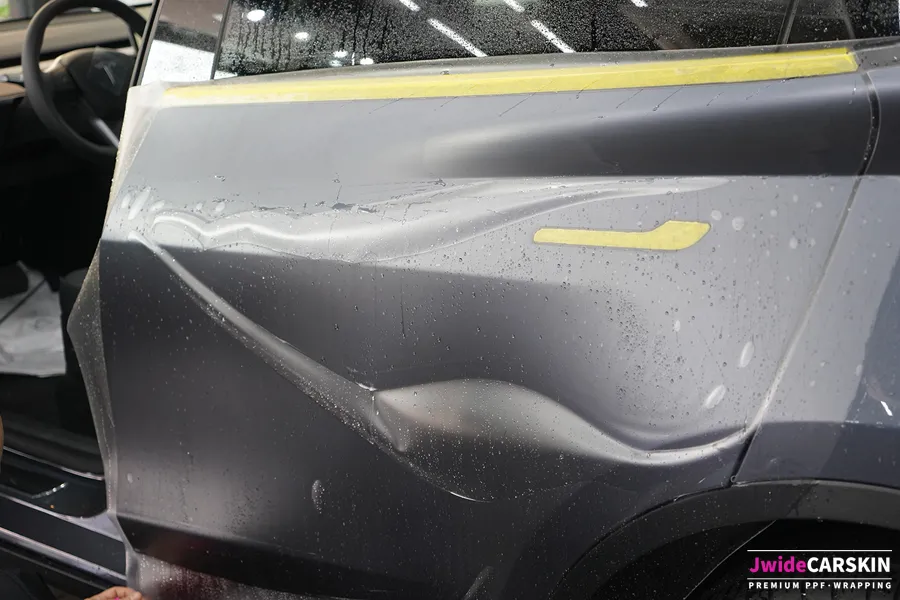
PPF is a clear, self-healing film that is professionally installed over the car's paint. Its main strength lies in its ability to absorb the impact of rock chips, road debris, and minor abrasions. High-quality PPF can even self-heal minor scratches when exposed to heat, such as from the sun or a heat gun. While it offers a degree of gloss enhancement, its primary purpose is sacrificial protection against physical damage. For a deeper understanding of installation and costs, check out our PPF service overview.