Tesla Paint Quality Issues Explained — Why Owners Are Installing PPF Before Leaving the Dealership
Tesla Paint Quality Issues: Why Owners Rush to Get PPF Installed
If you've just bought a new Tesla, you might be surprised to hear that one of the first things many owners do is book an appointment for paint protection film (PPF) installation. It's not paranoia—it's a practical response to a persistent problem in the EV community: Tesla paint quality issues have become nearly legendary among enthusiasts and everyday owners alike. In this article, we'll break down exactly what's happening with Tesla paint, why the problem exists, and what protection solutions are actually working for owners who want to preserve their investment.

Understanding Tesla Paint Quality Issues
Let's start with the reality: Tesla paint quality issues aren't a myth. They're well-documented across forums, social media, and in the real-world experiences of thousands of owners. The complaints range from soft, easily scratched clear coat to uneven paint application, orange peel texture, and premature fading—sometimes within the first few months of ownership.
What makes this frustrating is that many owners don't discover these problems until after they've taken delivery. The paint might look fine on the showroom floor under controlled lighting, but once the vehicle is in natural sunlight or under close inspection, the flaws become apparent. We're talking about visible imperfections on brand-new vehicles costing $50,000 to $100,000+.
The root cause? Tesla's focus on manufacturing speed and vertical integration has sometimes come at the expense of paint quality consistency. The company sources paint from multiple suppliers and uses different application methods across its production facilities. This has led to variable results—some owners get excellent paint, while others end up with panels that seem to scratch if you look at them wrong.

Common Paint Defects Owners Report
Based on countless owner reports and forum discussions, here are the most frequently cited paint quality issues:
- Soft clear coat: The protective clear coat layer is thinner than industry standard, making it vulnerable to light scratches, swirl marks, and water spots.
- Orange peel texture: The paint has a bumpy, uneven appearance similar to the texture of an orange peel rather than a smooth, glossy finish.
- Uneven color matching: Adjacent panels don't match perfectly, with noticeable variations in hue or saturation between doors, fenders, and body panels.
- Paint overspray: Paint appears on trim pieces, rubber seals, and glass where it shouldn't be, indicating quality control issues during application.
- Fading and oxidation: Some owners report that their paint begins fading or oxidizing faster than expected, particularly with darker colors like midnight black and solid black.
- Adhesion problems: In rare but concerning cases, paint has been known to peel or separate from the clear coat layer.
Why Tesla Has Paint Quality Issues: The Manufacturing Reality
To understand Tesla paint quality issues, you need to understand Tesla's business model. The company prioritizes production volume and cost efficiency. This isn't necessarily a moral failing—it's a business strategy that works for EV adoption and market penetration. However, this approach sometimes collides with traditional automotive quality standards that luxury brands like Mercedes, BMW, and Porsche maintain.
Here's what's actually happening in Tesla's paint shops:
Supply Chain Variation
Tesla doesn't manufacture its own paint. The company sources from multiple chemical suppliers, and different formulations have different properties. What works perfectly fine for one supplier's clear coat might be too thin or too soft when applied by another. This inconsistency compounds across millions of vehicles.
Application Process
Traditional luxury automakers spend significant time on paint preparation, application, and curing. Tesla's manufacturing process is optimized for speed. Robots apply paint, but the timing, temperature, and humidity conditions aren't always perfectly controlled. When you're building vehicles on a just-in-time schedule, paint quality can become a secondary concern to throughput.
Clear Coat Thickness
Industry standard clear coat thickness is typically between 1.5 to 2 millimeters. Some Tesla vehicles have been measured with clear coat as thin as 0.8 to 1.2 millimeters. That's a significant difference when it comes to scratch resistance and durability. Thinner clear coat means less protection against the elements and normal wear and tear.
Quality Control and Inspection
While Tesla has improved its quality control processes over the years, the sheer volume of vehicles being produced means that some imperfect panels slip through. Many owners report that their vehicles arrived with paint issues that weren't caught during final inspection.
The Real Cost of Tesla Paint Quality Issues
Paint defects aren't just cosmetic annoyances. They have real financial implications for owners. A single panel repaint can cost $500 to $1,500 at a certified Tesla service center. If multiple panels need work, you're looking at thousands of dollars in repair costs that shouldn't exist on a new vehicle.
Additionally, paint defects can affect resale value. A used Tesla with visible paint issues will command a lower price than one with pristine paint. Over the five to seven year ownership period, this can amount to a $2,000 to $5,000 depreciation hit.
This is why so many owners are taking matters into their own hands by investing in protective solutions like paint protection film (PPF) immediately after purchase.
| Paint Defect Type | Typical Repair Cost | Frequency Among Owners | Prevention Method |
|---|---|---|---|
| Swirl marks and light scratches | $200-$400 (polish and seal) | Very common | PPF or ceramic coating |
| Single panel repaint | $500-$1,200 | Common | Full or partial PPF |
| Multiple panel defects | $2,000-$5,000+ | Moderate | Full-body PPF wrap |
| Uneven color matching | $1,500-$3,000 (full respray) | Less common but persistent | Accept or full PPF to hide |
| Orange peel texture | $2,000-$4,000 (full respray) | Uncommon | Full-body PPF |

Paint Protection Film: The Most Popular Solution for Tesla Paint Quality Issues
Given the prevalence of Tesla paint quality issues, it's no wonder that PPF installations have become practically standard among Tesla owners. In fact, based on OhCar's review analysis, owners are discussing PPF protection across all popular Tesla models—from the Model S to the Model Y.
What Is Paint Protection Film?
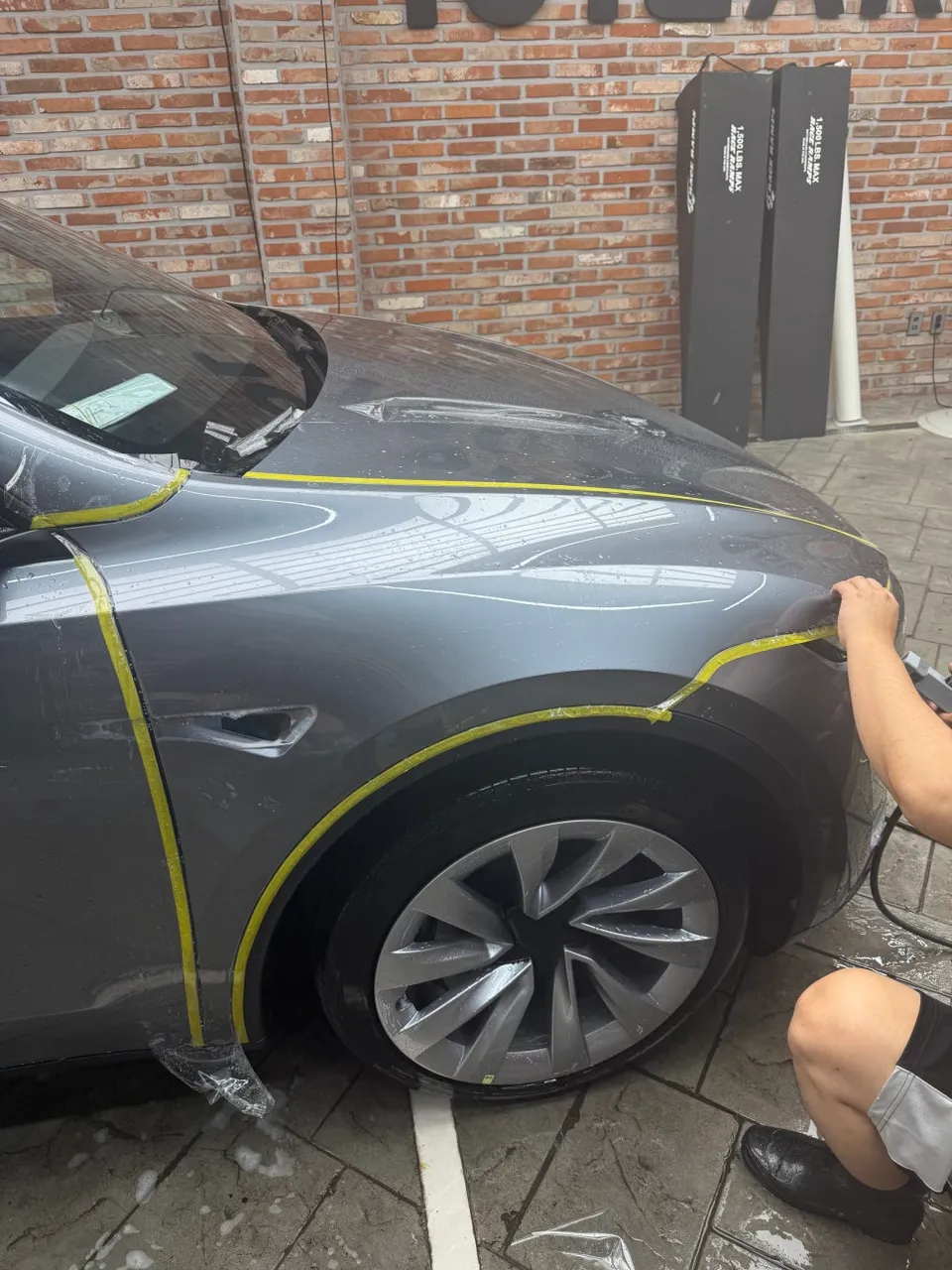
Paint protection film (PPF) is a transparent, thin polyurethane layer applied directly to your vehicle's painted surfaces. It acts as a barrier between your paint and the elements—rocks, road debris, UV rays, bird droppings, tree sap, and yes, even careless washing techniques.
The film is self-healing to a degree. Minor scratches and swirls can disappear when the film is exposed to heat, as the polyurethane has memory and can return to its original state. It's like having an invisible suit of armor for your paint.
Full vs. Partial PPF for Tesla Vehicles
When it comes to PPF protection for Teslas, owners have two main options:
Full-Body PPF Wrap
This covers the entire vehicle—hood, roof, doors, fenders, side panels, and even the rear bumper. The advantage is complete protection against all paint defects and environmental damage. According to OhCar's database reviews, full PPF wraps for Tesla Model Y vehicles typically range from $2,500 to $3,500, depending on the installer, paint condition, and film quality.
The disadvantage is cost and the fact that PPF isn't invisible. High-quality films like XPEL and 3M have minimal visual impact, but budget films can create a slightly wavy or textured appearance.
Partial PPF Coverage
Many owners opt for strategic PPF coverage on high-impact areas: the front bumper, hood, front fenders, and side mirrors. These areas take the most abuse from road debris and environmental hazards. Partial PPF typically costs $800 to $1,500.
This approach balances cost and protection. You're protecting the areas most likely to show damage while keeping costs reasonable.
PPF Pricing Based on OhCar Data
Let's look at real-world pricing from actual Tesla owners who've shared their PPF experiences on OhCar:
| Service Type | Vehicle | Cost Range | Coverage |
|---|---|---|---|
| Full PPF Wrap | Tesla Model Y | $2,500-$3,500 | Entire exterior |
| Full PPF Wrap | Tesla Model S | $1,200-$2,000 | Entire exterior |
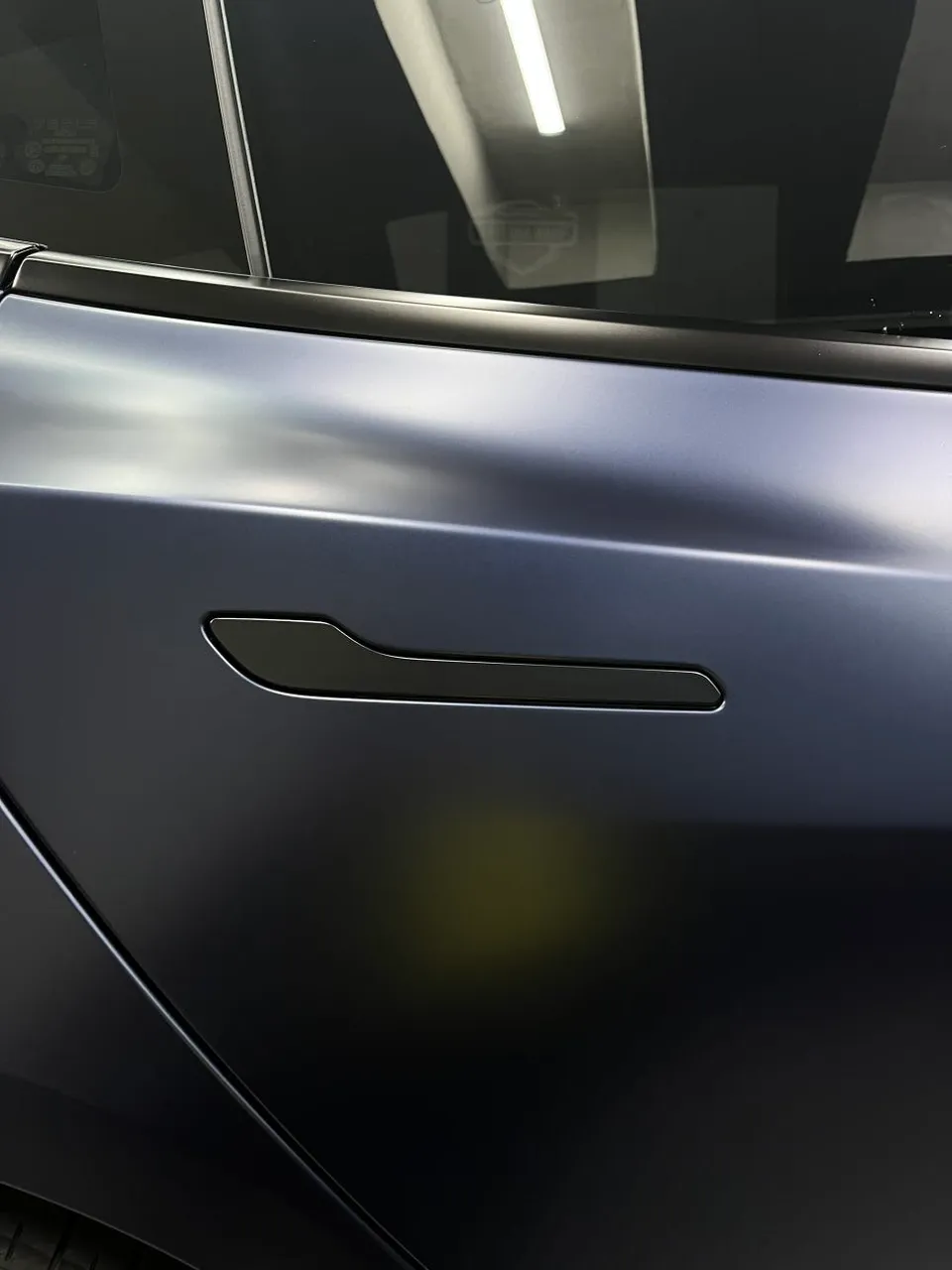
| Full PPF Wrap (Satin Finish) | Tesla Model Y | $3,000-$4,000 | Entire exterior + custom satin finish |
| Partial PPF (High-Impact Zones) | Tesla Model Y | $800-$1,200 | Hood, bumper, fenders, mirrors |
Note that pricing varies based on the film brand (XPEL is premium, 3M is mid-range, cheaper alternatives exist), installer expertise, your location, and whether your paint requires prep work to remove existing defects.
Other Protection Solutions for Tesla Paint Quality Issues
While PPF is the most popular solution, it's not the only way to protect your Tesla from paint defects and environmental damage. Let's explore the alternatives.
Ceramic Coating
Ceramic coating is a liquid nanotechnology product that bonds to your paint, creating a hydrophobic, UV-resistant layer. Unlike PPF, ceramic coating is much thinner—just a few microns. It won't protect against physical scratches and impacts, but it provides excellent protection against chemical contamination, UV fading, and water spots.
For Teslas with paint quality issues, ceramic coating is often applied over PPF to add an extra layer of protection and make maintenance easier. Typical ceramic coating costs $500 to $1,500, depending on the quality of the product and the installer.
Traditional Wax and Sealant
This is the budget option. A good car wax or synthetic sealant provides temporary protection and improves the appearance of your paint. However, it requires frequent reapplication—every two to four months—and doesn't provide protection against scratches or physical damage.
If you have Tesla paint quality issues like soft clear coat, wax alone won't solve the problem. It's more of a maintenance product than a protective solution.
Paint Correction and Professional Detailing
Before applying PPF or ceramic coating, many owners opt for professional paint correction. This involves machine polishing to remove swirl marks, light scratches, and orange peel texture. For paint with significant defects, correction can cost $1,000 to $3,000.
Paint correction doesn't prevent future damage, but it does improve the starting point for protection products and ensures better adhesion of PPF or ceramic coating.
Comparing Protection Methods: Which One Is Right for Your Tesla?
| Protection Method | Cost | Physical Scratch Protection | UV/Chemical Protection | Longevity | Maintenance |
|---|---|---|---|---|---|
| PPF (Full-Body) | $2,500-$4,000 | Excellent | Excellent | 5-10 years | Minimal (wash and rinse) |
| Ceramic Coating | $500-$1,500 | None | Excellent | 2-5 years | Regular maintenance washes |
| PPF + Ceramic Coating | $3,500-$5,000 | Excellent | Excellent | 5-10 years (PPF), 2-5 years (coating) | Regular maintenance, periodic re-coating |
| Professional Paint Correction | $1,000-$3,000 | None (fixes existing) | None (temporary) | 1-3 years | Requires repeat treatments |
| Wax or Sealant | $50-$300 | None | Moderate | 2-4 months | Frequent reapplication |
Real Owner Experiences: What Tesla Owners Are Doing
Looking at the reviews analyzed from OhCar, the pattern is clear: Tesla owners dealing with paint quality issues are investing in comprehensive PPF protection. Here's what we're seeing:
Model Y Owners: Full PPF Dominates
The Tesla Model Y, the company's most popular vehicle, shows the strongest demand for full-body PPF protection. Multiple reviews in OhCar's database mention full PPF wraps with both glossy and satin finishes, ranging from $2,500 to $3,500. Owners explicitly state that they're protecting against paint quality concerns and environmental damage.
The satin finish option is particularly interesting—some owners are choosing protective wraps that also change the aesthetic of their vehicle, suggesting they're viewing PPF as both protection and customization.
Model S Owners: Strategic Protection
Model S owners in the database mention full-body PPF at lower price points ($1,200 mentioned in one review), likely due to the sedan's smaller surface area compared to the Model Y. This suggests that cost is a real consideration, and full PPF is becoming normalized even among budget-conscious owners.
The Common Thread: Urgency
What's notable across all these reviews is the sense of urgency. Owners aren't waiting months to get PPF installed—they're booking it immediately after purchase, sometimes even before they take delivery. This behavior directly reflects concerns about Tesla paint quality issues and the desire to prevent problems rather than deal with them later.

Tesla's Response and Recent Improvements
To Tesla's credit, the company has acknowledged paint quality concerns and has made incremental improvements over recent years. Newer production batches have shown better consistency, and Tesla has expanded its quality control processes.
However, these improvements are gradual and inconsistent across manufacturing locations. Berlin and Austin facilities, being newer, may have better paint processes than earlier facilities. But owners can't rely on the plant code or production date as a guarantee of quality.
Tesla also offers paint protection options through its own service centers, though these tend to be more expensive than third-party alternatives and may not offer the same level of customization as specialty detailing shops.
Preventing Tesla Paint Quality Issues: What You Can Do
Beyond professional protection, there are proactive steps every Tesla owner can take:
Pre-Delivery Inspection (PDI)
Before accepting your vehicle, conduct a thorough inspection in natural daylight. Look for orange peel, uneven color, paint drips, and clear coat thickness variations. Many dealers will authorize minor paint corrections before delivery if issues are documented.
Early Documentation
If you notice paint defects after purchase, document them with photos and timestamps. This is crucial if you need to file warranty claims or pursue lemon law remedies in your state.
Proper Washing Technique
Even with protection film or ceramic coating, proper washing reduces swirl marks and scratch risk. Use the two-bucket method (one for rinse, one for soapy water), microfiber wash mitts, and avoid automated car washes.
Regular Inspection and Maintenance
Schedule quarterly inspections to catch small issues before they become big problems. Touch-ups and paint correction are cheaper when done early.
Is PPF Worth It for Your Tesla?
Let's be direct: given the prevalence of Tesla paint quality issues, PPF represents an investment that pays dividends in resale value, long-term appearance, and peace of mind.
If you're keeping your Tesla for five to seven years or longer, full-body PPF ($2,500-$3,500) is easily justified. You're looking at $400-$700 per year, which is negligible compared to the cost of panel repaints, ceramic coatings, and depreciation from visible paint damage.
If you're planning to sell or trade in within three years, partial PPF ($800-$1,200) on high-impact areas is a reasonable compromise that protects the most vulnerable sections while keeping costs down.
The only scenario where PPF might not make sense is if you're buying a used Tesla with already-damaged paint where repainting is your only option. In that case, you'd want to handle the paint issues first, then apply PPF to protect the repair work.
FAQ: Tesla Paint Quality Issues
Q1: Are all Teslas affected by paint quality issues?
A: No, but the problem is widespread enough that most Tesla owners will encounter some degree of paint imperfection. Newer vehicles from Berlin and Austin plants show better consistency, but variability remains. Some owners get lucky with perfect paint; others discover defects within weeks of purchase. The safest approach is to assume your Tesla will benefit from protective measures.
Q2: Will Tesla warranty cover paint defects?
A: Tesla's standard warranty covers manufacturing defects, and this can sometimes include paint issues. However, Tesla's definition of a defect is narrow. Minor swirl marks, light scratches, and slight orange peel texture may not qualify. Severe defects like peeling or large uneven areas are more likely to be covered. Document issues immediately and contact Tesla service to make warranty claims. Note that warranty coverage varies by location and specific circumstances.
Q3: How soon should I get PPF installed after purchasing my Tesla?
A: As soon as possible. Ideally, within the first week of ownership, before your vehicle accumulates environmental contaminants or road rash. Some owners arrange PPF installation before taking delivery from the dealership. The longer you wait, the higher the risk of paint damage that PPF won't protect against. Additionally, PPF works best on clean, undamaged paint, so earlier installation means better adhesion and longer-term performance.
Q4: Can I apply PPF myself to save money?
A: Technically, yes, but it's not recommended unless you have professional experience. PPF application requires specialized skills—proper stretching, alignment, heat manipulation, and seam finishing. DIY installation often results in air bubbles, wrinkles, misalignment, and poor protection. The cost difference between DIY ($500-$800 in materials) and professional ($2,500+) installation usually isn't worth the risk of ruining your paint or compromising protection. Professional installers also offer warranties on their work.
Q5: Does ceramic coating alone protect against paint quality issues?
A: No. Ceramic coating provides chemical and UV protection but offers zero protection against physical scratches, swirl marks, and impact damage. It's best used in combination with PPF or as a secondary protective layer on top of PPF. If you're dealing with Tesla paint quality issues like soft clear coat, ceramic coating won't prevent new scratches from forming. PPF is the primary protection against physical damage.
Looking for Professional Paint Protection?
If you're ready to protect your Tesla from paint quality issues and environmental damage, professional-grade PPF and ceramic coating installations make a real difference. The right installer can ensure proper application, recommend the best products for your needs, and provide warranties on their work.
Looking for professional PPF, ceramic coating, or window tinting services? Compare verified shops and read real owner reviews on OhCar. Our platform connects you with certified installers in your area, shows you detailed reviews from other Tesla owners, and helps you make informed decisions about paint protection. Find the right shop today and protect your investment.
Comments (4)
Just wrapped my Model Y in XPEL Ultimate last month and couldn't be happier — $3,200 for full front end and hood. Arizona sun is brutal on Tesla's paint, and honestly after hearing about chip problems from other owners here, PPF felt like a no-brainer before hitting the roads.
Just wrapped my 911 in XPEL Ultimate before even taking delivery — couldn't risk the paint on a $120k car, especially after hearing nightmare stories about Porsche's clear coat durability. The $5,500 investment stings, but one rock chip on that midnight blue would cost me thousands to repair and look like garbage forever.
Yeah, I get it — my M4's paint is bulletproof compared to what I've heard from Tesla friends, but NYC streets are brutal for everyone. Just wrapped mine in XPEL Ultimate last year ($5,200 for full body) and it's already saved me from countless door dings and that one pothole that threw up concrete. Tesla owners aren't wrong to panic about factory paint; mine came flawless from BMW but the city still eats cars alive.
Explore Related Services on OhCar